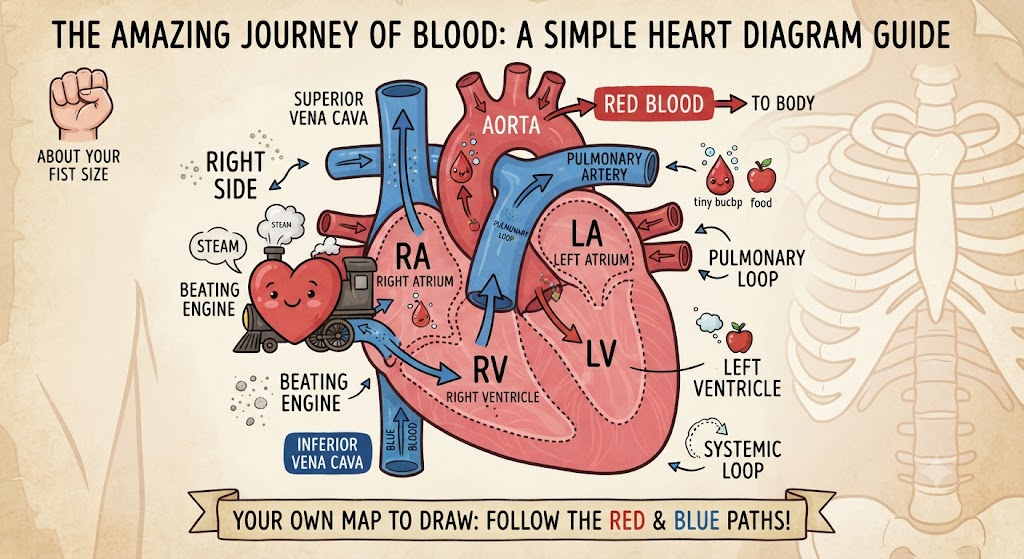

Did you know you have a hard-working muscle inside your chest right now? It beats all day and all night without ever taking a break. We call this amazing muscle the heart. A Simple Heart Diagram helps us see how this pump keeps us alive. Think of your heart as the strongest little engine in the whole world. It is about the size of your closed fist. Even though it is small, it does a giant job. Every single minute, it pushes blood to every part of your body.
Blood carries food and air to your toes, your brain, and your fingers. Without this steady beat, your body could not run or play. Looking at a drawing of the heart lets us learn its secrets. We can see the different rooms inside it. We can trace the paths the red and blue parts of our blood take. It is like looking at a secret map of a hidden treasure. By the end of this fun guide, you will know all about your beating engine. You can even draw your own map to show your friends. Let us dive in and explore the wonderful world inside your chest together!
What Does the Heart Look Like?
When you look at a simple heart diagram, you might notice it looks a bit like a cone or a peach. It sits right in the middle of your chest, tilted a little bit to the left side. Artists and scientists draw it with two main sides. There is a right side and a left side. But wait! On the page, the right side of the heart is actually on your left as you look at it. It is like the heart is facing you.
The outside of the heart looks smooth and shiny. It wears a special jacket called the pericardium. This jacket keeps the heart safe and wet so it does not rub against your ribs. When we slice the drawing open, we see four special rooms. The top rooms are small and neat. The bottom rooms are big and strong. They all work together like a team of dancers. One room catches the blood. The next room pushes it out. It is a wonderful dance of life that never stops.
Meet the Four Chambers of the Heart
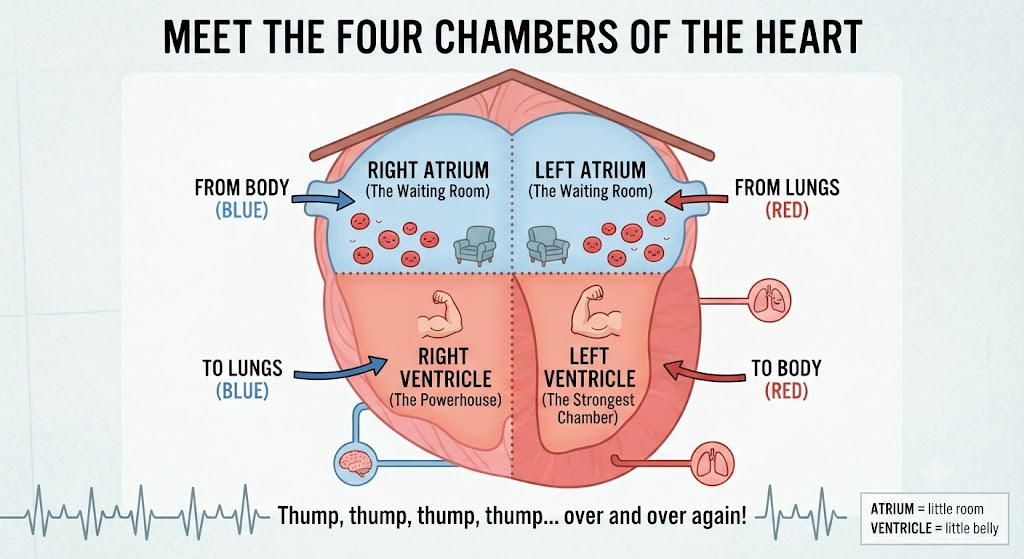
A simple heart diagram shows us four special rooms called chambers. The top two rooms have a fancy name: the right atrium and the left atrium. Atrium just means a little room or a hall. These top rooms act like waiting rooms. They catch the blood when it comes back from your body and your lungs.
The bottom two rooms are the big powerhouses. We call them the right ventricle and the left ventricle. Ventricle means a little belly or pouch. These bottom rooms do the heavy lifting. They squeeze tight to push the blood far away. The right ventricle pumps blood to your lungs to get fresh air. The left ventricle is the strongest of all. It pushes bright red blood all the way down to your toes and all the way up to your brain. All four rooms work together in a neat rhythm. Thump, thump, goes the beat, over and over again!
The Right Side: Catching Used Blood
Let us trace the path of the blood on the right side of a simple heart diagram. The blood that comes back from your hands and feet is dark red or blueish. Why? Because it used up all its good oxygen playing tag or running outside. This used blood needs a fresh refill.
It enters the top right room, the right atrium. From there, it drops down into the bottom right room, the right ventricle. The right ventricle gives a big squeeze. It pushes this used blood through a special tube straight into your lungs. Your lungs are like a big sponge. When you breathe in fresh air, your lungs trade the old waste air for sweet new oxygen. Now your blood turns bright red again. It is clean, fresh, and ready for a brand new trip.
The Left Side: Pushing Fresh Blood Out
Now let us look at the left side of our simple heart diagram. The bright red blood comes rushing back from your lungs. It is full of oxygen and ready to feed your body. It lands in the top left room, which is the left atrium.
From the left atrium, the blood slips down into the bottom left room, the left ventricle. This bottom left room has thick, muscular walls. It has to be super strong. When it squeezes, it sends the fresh blood zooming out into a giant red highway called the aorta. The aorta is the biggest blood pipe in your body. It branches out into smaller and smaller roads. Soon, the oxygen reaches your muscles, your tummy, and even the tip of your nose. This is how you get the energy to run, jump, and smile all day long!
The Amazing Work of Heart Valves
Have you ever wondered how blood only goes in one direction? A simple heart diagram helps explain this with tiny doors called valves. Inside your heart, these valves act like one-way swinging doors. They open to let the blood pass through. Then they snap shut with a tiny click.
If these doors did not close, the blood might flow backward the wrong way. That would make the heart very tired! These little flaps open and shut with every single beat. When a doctor listens to your chest with a stethoscope, the “lub-dub” sound you hear is actually these little doors snapping shut. The “lub” is the first set of doors closing. The “dub” is the second set closing. It is like a tiny drum playing inside you to keep the traffic moving forward.
The Main Highway: The Vena Cava and Aorta
Every good city needs big roads, and your heart has the biggest ones of all. On a simple heart diagram, you will see two giant tubes colored in blue and red. The blue superhighway is called the vena cava. It brings all the used blood from your head and body back into the heart.
The red superhighway is the mighty aorta. It takes the freshly pumped blood out to the rest of you. I like to imagine these tubes as giant water slides. The blue slide brings the water back to the pump. The red slide shoots the water out to the water park. They are thick and stretchy like rubber hoses. They handle a lot of pressure every time your heart gives a strong squeeze.
Keeping the Beat: The Heart’s Electric Spark
How does the heart know when to squeeze? It has its own tiny battery! High up in the wall of the right atrium, a simple heart diagram points to a special group of cells called the pacemaker. This little spark maker sends a tiny zap of electricity across the heart muscle.
When the electricity touches the top rooms, they squeeze. Then the spark travels down to the bottom rooms, and they squeeze right after. It is like a wave in a stadium where people stand up one after another. This natural electricity keeps your heart beating in a steady rhythm. When you run fast, your brain tells the pacemaker to send sparks faster. When you sleep, it slows down so your heart can rest.
Why Your Heart Needs Good Food and Exercise
Your heart is a muscle, just like the muscles in your arms. A simple heart diagram reminds us that muscles need care to stay strong. When you run, ride your bike, or swim, your heart has to work a little harder. This makes it strong and fit.
Eating yummy foods like crisp apples, crunchy carrots, and bright berries also helps your heart stay healthy. Drinking plenty of water keeps your blood flowing smoothly. Try to avoid eating too many sweet candies or greasy snacks every single day. Taking good care of your heart means it will take good care of you for a very long time. Go outside and play a game today to give your heart a happy workout!
Fun Facts About Your Hardworking Heart
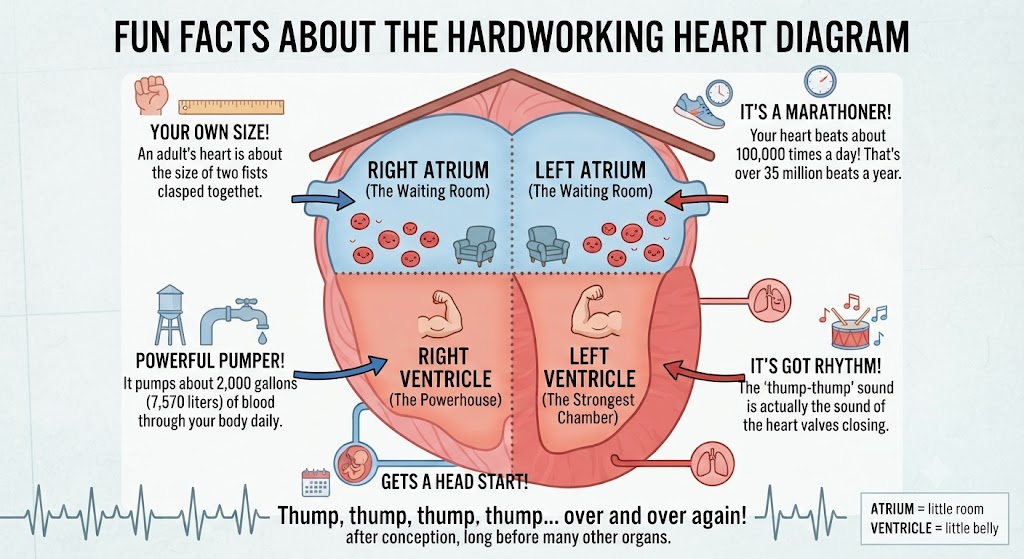
Let us look at some cool facts you can share with your science teacher. A simple heart diagram only tells part of the story. Did you know your heart beats about 100,000 times in one single day? That is like jumping up and down 100,000 times without stopping!
Also, if you laid out all the blood tubes from your body in a straight line, they would wrap around the whole planet Earth more than twice. Your heart is truly a super-worker. Even when you are fast asleep dreaming about flying, your heart is still working hard in the dark. Give your chest a little pat and say thank you to your amazing personal engine today!
Complete Detailing Table
| Part Name | Color on Map | What It Does | Simple Job Description |
| Right Atrium | Blue | Top right chamber | Catches used blood from the body |
| Right Ventricle | Blue | Bottom right chamber | Pushes used blood to the lungs |
| Left Atrium | Red | Top left chamber | Catches fresh oxygen blood from lungs |
| Left Ventricle | Red | Bottom left chamber | Pushes fresh blood to the whole body |
| Vena Cava | Blue | Big blue tube | Brings used blood back to the heart |
| Aorta | Red | Big red tube | Sends fresh blood out to your body |
| Valves | White/Clear | Tiny swinging doors | Keeps blood moving in one direction |
Frequently Asked Questions
Which side of the heart is stronger?
The left side of the heart is much stronger than the right side. It has to pump fresh red blood all the way down to your toes and all the way back up. The right side only needs to push blood a short distance to your lungs.
Why is some blood blue and some red?
Blood is never actually blue! Used blood looks dark red or purpleish inside your veins because it has less oxygen. When it visits your lungs and gets a fresh breath of air, it turns bright, cheerful red.
What makes the thump sound in your chest?
That sound is your heart valves snapping shut like tiny doors. The first sound is the top doors closing. The second sound is the bottom doors closing tight so the blood does not go backward.
How big is a child’s heart?
Your heart is about the same size as your own closed fist. As you grow bigger and taller over the years, your heart grows right along with you to match your body.
Can you control your heartbeat?
No, you do not have to think about making your heart beat. It runs on its own special electricity. It beats automatically whether you are awake, talking, playing, or sleeping soundly in your bed.
How does exercise help your heart?
Playing outside and running around makes your heart muscle stronger. A strong heart can pump blood easily without getting tired out too fast. That gives you more energy for your day!
Conclusion
We have learned so much about the amazing pump inside our chests today. A simple heart diagram makes it easy to see how the four rooms and tiny doors keep us moving and playing. Your heart is a loyal friend that works for you every second of the day. You can keep it happy by eating healthy snacks, drinking fresh water, and running around outside with your friends. Why not draw your own colorful heart map right now and show your family what you have learned? Keep active, stay curious, and take great care of your wonderful beating engine!