
You’ve probably seen both rehireable or rehirable used in job applications, HR documents, or employee evaluations—and wondered which one is actually correct. It’s a small detail, but in professional communication, even minor spelling choices can shape how polished and credible you appear.
In this guide, we’ll break down the correct spelling, explain why the confusion exists, and show you how to use the term properly in real-world situations. Whether you’re a job seeker or an HR professional, you’ll leave with clarity and confidence.
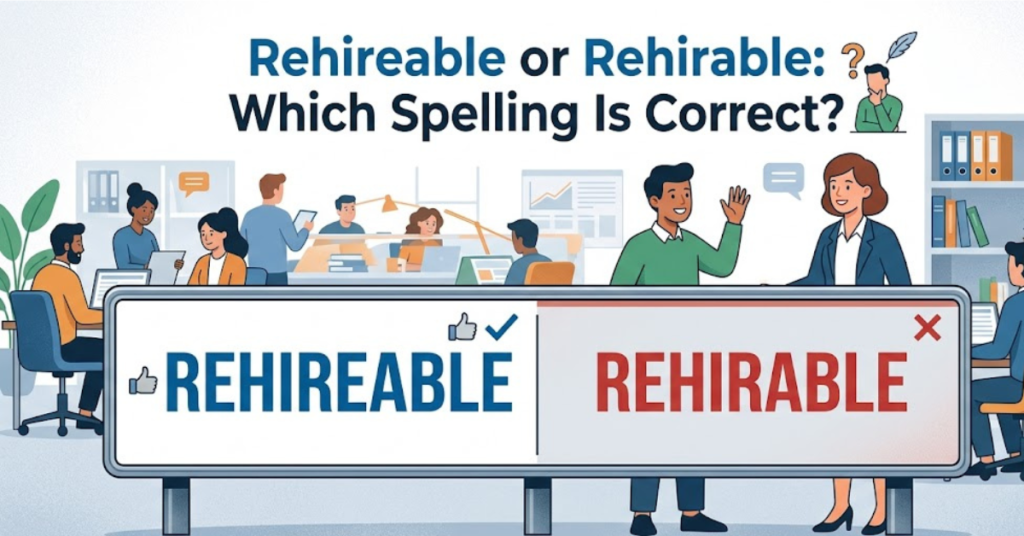
Rehireable or Rehirable: Which One Is Correct?
Let’s settle it right away:
“Rehirable” is the correct and widely accepted spelling.
While “rehireable” might seem logical (since it mirrors words like “hireable”), it’s generally considered incorrect or nonstandard in professional writing.
Why “Rehirable” Wins
The word is formed by combining:
- “Rehire” (to hire again)
- “-able” (a suffix meaning capable of)
When forming adjectives from verbs ending in “e,” standard English rules usually drop the extra “e” before adding “-able.”
Examples:
- Hire → Hirable
- Rehire → Rehirable
- Move → Movable
So, rehirable follows consistent grammar rules, while “rehireable” adds an unnecessary extra vowel.
What Does Rehirable Mean?
Rehirable refers to a former employee who is eligible to be hired again by a company.
Common Contexts:
- HR exit records
- Employee performance evaluations
- Reference checks
- Job applications
Example Sentences:
- “She left on good terms and is marked as rehirable.”
- “Candidates listed as rehirable are prioritized for future openings.”
Why the Confusion Happens
English spelling isn’t always intuitive, and this is a classic example. Here’s why people often mix up rehireable or rehirable:
1. Influence of Similar Words
Words like “hireable” make “rehireable” seem correct at first glance.
2. Pronunciation Over Logic
Both versions sound nearly identical, so people rely on how it sounds rather than grammar rules.
3. Informal Usage Online
You may see “rehireable” in blogs or forums, but that doesn’t make it standard or correct.
When Should You Use “Rehirable”?
Use rehirable in any professional or formal context, especially in:
HR and Workplace Documents
- Employee exit forms
- Internal hiring policies
- Background checks
Job Applications
- When explaining past employment
- When discussing eligibility for reemployment
Professional Communication
- Emails
- Reports
- LinkedIn profiles
Tips to Remember the Correct Spelling
If you’re still unsure, here are a few quick memory tricks:
- Drop the extra “e” before adding “-able.”
- Think: Rehire → Rehirable (not rehire + able)
- Compare with similar words like “movable” or “usable.”
Common Mistakes to Avoid
Here are some frequent errors people make:
- Writing “rehireable” in resumes or cover letters
- Using both spellings interchangeably
- Assuming both are equally acceptable
Stick with rehirable to maintain professionalism and consistency.
Related Terms You Should Know
Understanding similar HR terms can also help:
- Eligible for rehire – A phrase often used instead of “rehirable”
- Termination status – Indicates why an employee left
- Good standing – Suggests a positive exit record
These terms often appear together in HR documentation.
FAQs
1. Is “rehireable” ever correct?
No, “rehireable” is considered nonstandard. “Rehirable” is the correct spelling in formal and professional writing.
2. What does “not rehirable” mean?
It means a former employee is not eligible to be hired again, often due to performance issues or policy violations.
3. Can I use “eligible for rehire” instead?
Yes, it’s a clear and widely accepted alternative, especially in formal documents.
4. Is “rehirable” used globally?
Yes, it’s commonly used in English-speaking workplaces worldwide, especially in HR contexts.
5. Does spelling really matter in this case?
Absolutely. Small errors in professional writing can affect credibility, especially in resumes or official records.
Conclusion
When it comes to rehireable or rehirable, the correct choice is clear: rehirable is the standard, professional spelling you should use every time. It follows established grammar rules and is widely accepted in HR and workplace communication.
Getting these details right may seem minor, but they can make a big difference in how you’re perceived professionally. So next time you’re updating a resume or reviewing employee records, you’ll know exactly which spelling to trust.
If you want to sharpen your writing even further, explore more guides on commonly confused words—you’ll be surprised how often these small tweaks can elevate your communication.