
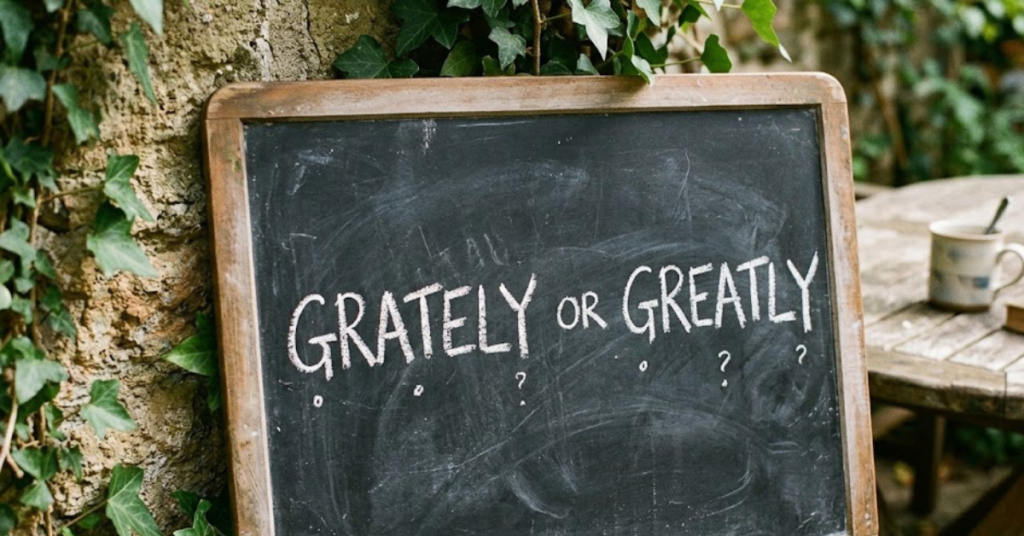

English spelling can be tricky, especially when words sound exactly the way we expect them to. One common confusion involves grately or greatly. Many people type grately when they actually mean greatly, especially in emails, essays, social media posts, and professional communication.
If you’ve ever paused while writing and wondered whether it’s greatly or grately, you’re not alone. The good news is that the answer is straightforward: greatly is the correct spelling, while grately is considered a misspelling in standard English.
In this guide, we’ll explore grately vs greatly, explain the meaning of greatly, provide examples, discuss why the mistake happens, and show you how to avoid it in your writing.
Grately or Greatly: Which Is Correct?
Let’s start with the short answer.
Greatly = Correct
Grately = Incorrect spelling
The word greatly is a legitimate English adverb that means:
- To a large extent
- Very much
- Significantly
- Considerably
The spelling grately does not appear in standard dictionaries as a recognized English word.
Quick Example
Correct:
- Your support is greatly appreciated.
- The new policy has greatly improved productivity.
Incorrect:
- Your support is grately appreciated.
- The new policy has grately improved productivity.
What Does Greatly Mean?
To understand greatly or grately, it’s helpful to know what greatly actually means.
Greatly Definition
Greatly is an adverb used to emphasize the degree or extent of something.
It often means:
- To a significant degree
- Very much
- Substantially
- Considerably
Examples
- The changes greatly benefited the company.
- She was greatly relieved after receiving the results.
- Customer satisfaction has greatly increased.
In each sentence, greatly strengthens the meaning of the action.
Why Do People Write “Grately”?
The confusion between grately vs greatly usually comes from pronunciation.
When spoken quickly, many people pronounce greatly in a way that sounds almost identical to grately. As a result, they spell the word based on how it sounds rather than how it’s written.
Common Reasons for the Mistake
- Fast typing
- Pronunciation confusion
- Lack of familiarity with the written form
- Autocorrect not catching every error
- Habitual misspelling
This mistake is particularly common in informal writing and online communication.
Greatly vs Grately: Side-by-Side Comparison
| Feature | Greatly | Grately |
| Correct spelling | Yes | No |
| Dictionary word | Yes | No |
| Standard English | Yes | No |
| Appropriate for professional writing | Yes | No |
| Means “to a large extent” | Yes | No |
If you’re deciding between greatly or grately, always choose greatly.
How to Use Greatly Correctly
The word greatly is commonly used to modify verbs, adjectives, and sometimes participles.
In Professional Writing
- We greatly appreciate your feedback.
- The project greatly exceeded expectations.
- Employee engagement greatly improved.
Academic Writing
- The findings greatly support the proposed theory.
- Technology has greatly influenced modern education.
In Everyday Conversation
- I greatly enjoyed the movie.
- Your help was greatly appreciated.
Common Phrases With Greatly
You may have encountered these expressions frequently.
Greatly Appreciated
One of the most common uses.
Examples:
- Your assistance is greatly appreciated.
- Any feedback would be greatly appreciated.
Greatly Improved
Used to describe significant progress.
Examples:
- Sales have greatly improved.
- Her confidence greatly improved over time.
Greatly Reduced
Used when something decreases substantially.
Examples:
- The update greatly reduced loading times.
Greatly Increased
Used when something grows considerably.
Examples:
- Productivity greatly increased.
- Demand has greatly increased.
Grately vs Greatly in Business Communication
Professional emails and workplace communication often include the word greatly.
Correct Examples
- We greatly value your partnership.
- Your patience is greatly appreciated.
- The new strategy greatly benefited our team.
Incorrect Examples
- We grately value your partnership.
- Your patience is grately appreciated.
Misspelling commonly used phrases can reduce professionalism and credibility.
Synonyms for Greatly
If you want variety in your writing, consider these alternatives.
Formal Alternatives
- Significantly
- Substantially
- Considerably
- Remarkably
Informal Alternatives
- A lot
- Very much
- Quite a bit
- Seriously
Example
Instead of:
- The update greatly improved performance.
You could write:
- The update significantly improved performance.
Easy Trick to Remember the Correct Spelling
A simple memory device can help.
Think of the Root Word “Great”
The word greatly comes directly from:
Great + ly = Greatly
Since great contains the letters “eat,” the correct spelling keeps them.
Visual Reminder
Great → Greatly
Grate → Grately
The word grate is a completely different English word.
Examples:
- Please grate the cheese.
- The metal grate covers the drain.
This distinction makes the correct spelling easier to remember.
Common Mistakes to Avoid
Mistake #1: Writing Grately Appreciated
Your help is grately appreciated.
Your help is greatly appreciated.
Mistake #2: Assuming Spell Check Will Catch It
Some software may overlook mistakes depending on context.
Always proofread important documents.
Mistake #3: Confusing Greatly With Grate
Remember that grate relates to shredding food or a metal framework, while greatly means significantly.
Examples of Greatly in Sentences
Here are practical examples showing correct usage.
Business
- Revenue greatly exceeded forecasts.
- The company greatly expanded its operations.
Education
- Online learning has greatly changed education.
- Students greatly benefited from the program.
Personal Life
- I greatly appreciate your support.
Technology
- Artificial intelligence has greatly influenced many industries.
- The software update greatly enhanced performance.
Why Greatly Matters in Writing
Words like greatly help add emphasis and precision.
Instead of saying:
- The product improved.
You can say:
- The product greatly improved.
This creates a clearer picture of the degree of improvement and makes your writing more impactful.
Frequently Asked Questions
Is it grately or greatly?
Greatly is the correct spelling. Grately is considered a misspelling.
Is grately a real word?
No. Standard English dictionaries recognize greatly, not grately.
What does greatly mean?
Greatly means to a large extent, significantly, considerably, or very much.
Why do people spell greatly as grately?
The mistake usually occurs because the words sound similar when spoken quickly.
How do you use greatly in a sentence?
Example:
- Your support is greatly appreciated.
What is the difference between greatly vs grately?
Greatly is a valid English word, while grately is an incorrect spelling.
Is “greatly appreciated” correct?
Yes. “Greatly appreciated” is a common and grammatically correct phrase.
Conclusion
When comparing grately or greatly, the answer is simple: greatly is the correct spelling and the only form accepted in standard English. Whether you’re writing professional emails, academic papers, social media posts, or everyday messages, using greatly ensures your writing remains accurate and polished.
Remember that greatly means “to a significant extent” or “very much,” while grately is simply a spelling mistake that often results from pronunciation confusion. By understanding the difference between greatly or grately, grately vs greatly, and greatly vs grately, you’ll avoid a common writing error and communicate more effectively.
The next time you want to express appreciation, improvement, or significant impact, you’ll know exactly which word belongs on the page: greatly.