
Ever paused mid-sentence wondering whether to write spicey or spicy? You’re not alone. This tiny spelling dilemma trips up a lot of people, especially when talking about flavorful food or bold personalities.
In this guide, we’ll settle the debate once and for all: is it spicey or spicy? We’ll break down the correct spelling, explain why confusion happens, and show you how to use the word naturally in everyday writing.
The Correct Spelling
Let’s get straight to the point.
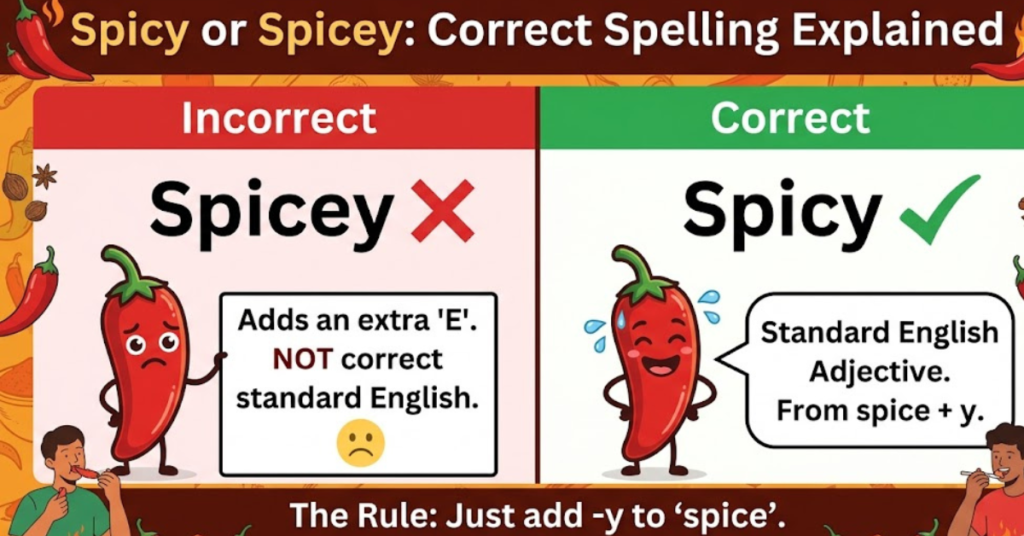
- Correct spelling: Spicy
- Incorrect spelling: Spicey
If you’ve ever searched spicey or spicy which is correct, the answer is clear—“spicy” is the only accepted spelling in standard English.
Why “Spicy” Is Correct
The word “spicy” comes from the noun spice, but English spelling rules change slightly when forming adjectives.
- “Spice” + “-y” → Spicy (not spicey)
This follows a common pattern where the silent “e” is dropped before adding “-y.”
Why Do People Write “Spicey”?
The confusion around spelling usually comes from how the word sounds. When spoken, both versions can sound similar, leading people to assume the spelling includes the “e.”
Here are a few reasons people make this mistake:
- Phonetic spelling habits
- Influence from words like “nice” → “nicely”
- Lack of familiarity with spelling rules
How to Spell Spicy Correctly Every Time
If you’re wondering how to spell spicey or spicy, here’s a simple trick:
Drop the “e” before adding “y.”
Examples:
- Spice → Spicy
- Ice → Icy
- Noise → Noisy
Quick Memory Tip
Think: “Spicy food doesn’t need extra letters.”
Short and simple—just like the correct spelling.
Spicy in Everyday Language
Spicy Food
When talking about flavor, spicy refers to food with heat or strong seasoning.
Examples:
- “I love spicy food with chili peppers.”
- “This curry is too spicy for me!”
This is the most common use when people search spicey or spicy food.
Spicy as Slang
Interestingly, spicy has taken on new meanings in casual conversation.
When people search spicey or spicy slang, they’re usually referring to meanings like:
- Bold or exciting
- Slightly risky or controversial
- Full of personality
Examples:
- “That outfit is spicy!”
- “Things got a bit spicy in that debate.”
Spicy in UK vs. US English
If you’re wondering about spicey or spicy UK, there’s no difference here.
- UK English: Spicy
- US English: Spicy
The spelling stays consistent across both regions.
Common Mistakes to Avoid
When dealing with spicey or spicy correct spelling, watch out for these:
- Writing “spicey” in formal documents
- Mixing both spellings in the same text
- Assuming pronunciation equals spelling
Best Practice
Always stick with “spicy”—whether you’re writing casually or professionally.
When to Use “Spicy”
Use “spicy” in different contexts like:
1. Food and Flavor
- Spicy noodles
- Spicy sauces
2. Personality or Style
- A spicy sense of humor
- A spicy fashion choice
3. Situations or Content
- A spicy conversation
- A spicy plot twist
FAQs
1. Is it spicey or spicy?
The correct spelling is spicy. “Spicey” is incorrect.
2. How do you spell spicey or spicy correctly?
You spell it spicy, without the “e.”
3. Why do people write spicey instead of spicy?
Because of pronunciation and confusion with similar words, people often assume the “e” stays.
4. Is spicey ever correct?
No, “spicey” is not recognized as a correct spelling in standard English.
5. Does spicy mean only hot food?
No. Besides food, it can describe personality, style, or something exciting.
Conclusion
So, the next time you hesitate over spicey or spicy, remember this simple rule: drop the “e” and go with “spicy.”
It’s the correct spelling across all forms of English and works for everything—from describing fiery dishes to lively conversations.
Now that you’ve got it sorted, try using “spicy” confidently in your writing, and maybe even in your next meal choice too.