
Ever paused mid-sentence wondering whether to use emerse or immerse? You’re not alone. The confusion around emerse vs immerse is surprisingly common, especially because one is widely used while the other feels unfamiliar—or even incorrect.
In this guide, we’ll break down what each word means, how they differ, and when (or if) you should use them. By the end, you’ll not only understand the distinction but also feel confident using the right word in any context.
What Does “Immerse” Mean?
Definition and Usage
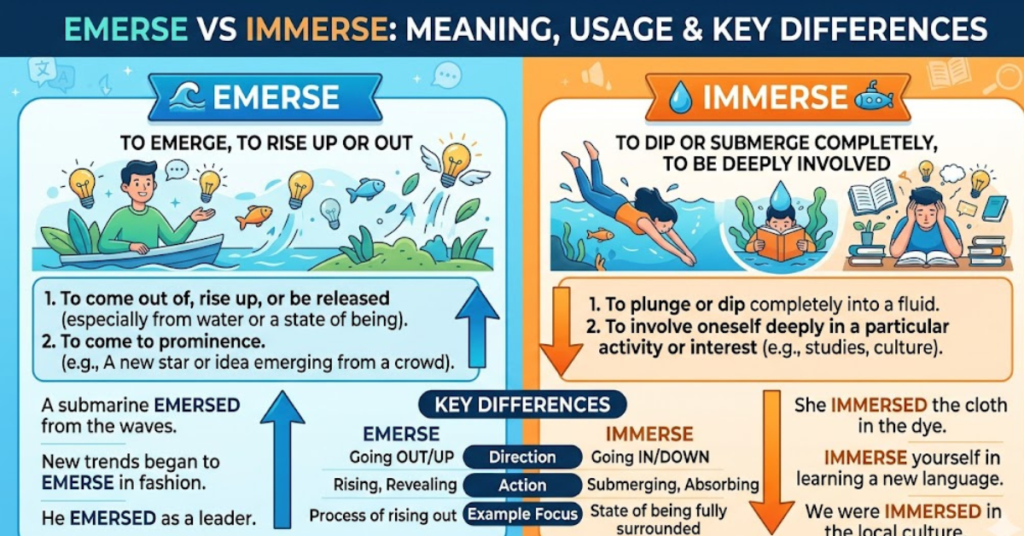
Immerse is a commonly used verb that means to completely involve or submerge something in a liquid or experience.
Common Uses of “Immerse”
- Literal meaning: To dip or submerge something fully in water
Example: She immersed the cloth in warm water. - Figurative meaning: To deeply engage in an activity or interest
Example: He immersed himself in learning a new language.
Key Takeaways
- It’s widely accepted in both formal and informal English
- Often used metaphorically in everyday language
- Common in writing, education, and conversation
What Does “Emerse” Mean?
Is “Emerse” Even a Word?
Here’s where things get tricky. Emerse is technically not a standard English word in modern usage. It may appear occasionally due to confusion with similar words like:
- Emerge (to come out or rise up)
- Immerse (to submerge or involve deeply)
Why the Confusion Happens
The mix-up in emerse vs immerse often comes down to:
- Similar spelling patterns
- Mishearing or typos
- Lack of familiarity with the correct term
Bottom Line
- “Emerse” is generally considered incorrect
- It should not be used in formal writing
- Most of the time, “immerse” or “emerge” is what you actually mean
Emerse vs Immerse: Key Differences
Let’s simplify the comparison:
| Feature | Immerse | Emerse |
| Valid Word | Yes | No (non-standard) |
| Meaning | To submerge or deeply involve | No clear accepted meaning |
| Usage | Common in daily language | Rare or incorrect |
| Context | Literal & figurative | Usually a mistake |
When Should You Use “Immerse”?
Practical Examples
You should use immerse when you want to express:
- Physical submersion
- Immerse vegetables in cold water to keep them fresh.
- Deep focus or involvement
- She immersed herself in the novel for hours.
- Learning or experiences
- Traveling helps you immerse in different cultures.
Pro Tip
If your sentence suggests “deep involvement” or “full absorption,” immerse is almost always the correct choice.
Common Mistakes and How to Avoid Them
Mistake #1: Using “Emerse” Instead of “Immerse”
- He emersed himself in the project.
- He immersed himself in the project.
Mistake #2: Confusing “Immerse” with “Emerge”
- She immersed from the water.
- She emerged from the water.
Quick Fix Strategy
- Think of immerse = in (both start with “im”)
- Think of emerge = exit
Why Understanding This Difference Matters
Using the correct word isn’t just about grammar—it’s about clarity and credibility. Misusing words like in the emerse vs immerse debate can:
- Confuse readers
- Weaken your writing
- Affect professional communication
Clear language builds trust, whether you’re writing an email, article, or social post.
FAQs
1. Is “emerse” a real word?
No, “emerse” is not recognized as a standard English word. It’s typically a misspelling or confusion with “immerse” or “emerge.”
2. What is the correct spelling: emerse or immerse?
The correct word is immerse when referring to submerging or deeply engaging in something.
3. Can “emerse” ever be used correctly?
In modern English, it’s not considered correct. You should avoid using it in writing or speech.
4. What’s the difference between immerse and emerge?
- Immerse: To go into something deeply
- Emerge: To come out of something
5. How can I remember the difference?
Associate immerse with “involvement” and emerge with “exit.”
Conclusion
Understanding the difference between emerse vs immerse is simpler than it first appears. While immerse is a widely accepted and useful word, emerse is generally a mistake you’ll want to avoid.
The key takeaway? When in doubt, go with immerse if you’re talking about deep involvement or submersion—and double-check your spelling before hitting send.
If you’re looking to sharpen your writing further, keep exploring commonly confused words. Small improvements like this can make a big difference in how clearly—and confidently—you communicate.