
Have you ever paused mid-sentence and wondered: inconsolable or unconsolable—which one is actually correct? You’re not alone. This small but surprisingly common language dilemma trips up writers, students, and even seasoned speakers.
In this guide, we’ll break down inconsolable or unconsolable, explore their meanings, explain which form is preferred, and show you how to use the right word with confidence. By the end, you’ll never second-guess this again.
What Does “Inconsolable” Mean?
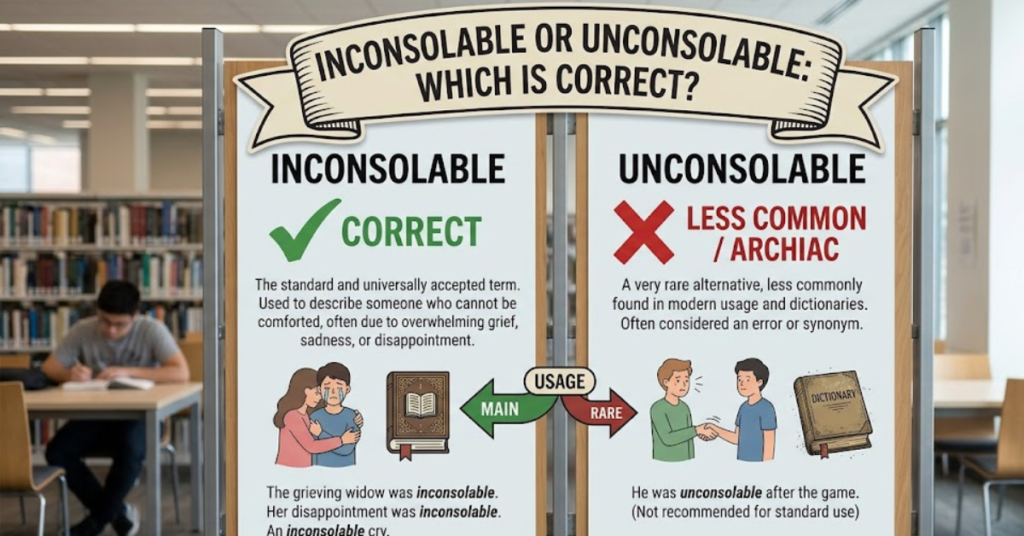
The word inconsolable describes someone who cannot be comforted, usually due to deep sadness or grief.
Simple definition:
- Inconsolable = Unable to be comforted or soothed
Example sentences:
- She was inconsolable after losing her pet.
- The child cried for hours, completely inconsolable.
It’s commonly used in emotional contexts—especially grief, heartbreak, or distress.
What About “Unconsolable”?
Now let’s address the confusion around inconsolable or unconsolable.
Technically, unconsolable exists as a word. It follows the same logic as other “un-” prefixed adjectives. However, it is rarely used in modern English and is considered less standard.
Key points:
- Unconsolable = Same meaning as inconsolable
- Much less common
- Often viewed as outdated or non-preferred
Example:
- He was unconsolable after the incident. (Grammatically correct, but uncommon)
Inconsolable or Unconsolable: Which Is Correct?
Let’s answer the big question directly:
Inconsolable is the correct and preferred word.
While both forms technically exist, inconsolable is:
- More widely accepted
- More commonly used
- Preferred in formal and informal writing
Why “unconsolable” is avoided:
- Sounds less natural to modern readers
- Rarely appears in standard usage
- May feel outdated or awkward
So if you’re wondering, “what is correct inconsolable or unconsolable?”—stick with inconsolable every time.
Why Does This Confusion Happen?
English loves prefixes like “in-” and “un-”, and both can mean “not.” That’s where the confusion starts.
Examples:
- Inaccurate (not accurate)
- Unhappy (not happy)
But not all words can take both prefixes naturally. Over time, usage determines what sounds “right.”
In this case:
- Inconsolable became standard
- Unconsolable faded into the background
When Should You Use “Inconsolable”?
Use inconsolable whenever you want to describe deep emotional distress that cannot be eased.
Common situations:
- Loss of a loved one
- Emotional trauma
- Heartbreak
- Children or infants crying intensely
Synonyms:
- Devastated
- Heartbroken
- Grief-stricken
- Distressed
- Uncomforted
Quick Comparison Table
| Word | Meaning | Usage Frequency | Recommended? |
| Inconsolable | Cannot be comforted | Very common | Yes |
| Unconsolable | Same meaning | Rare | No |
Common Mistakes to Avoid
When dealing with inconsolable or unconsolable, here are a few pitfalls:
- Using unconsolable in formal writing
- Assuming both are equally common
- Overthinking the choice
Simple rule:
If in doubt, choose inconsolable.
FAQs
1. Is it inconsolable or unconsolable?
Inconsolable is the correct and preferred form in modern English.
2. What is correct inconsolable or unconsolable?
Both exist, but inconsolable is the standard and widely accepted word.
3. What does inconsolable mean?
It means being unable to be comforted, usually due to extreme sadness or grief.
4. Is unconsolable wrong?
Not technically wrong, but it’s rare and not recommended for everyday use.
5. Why is inconsolable more common?
Language evolves through usage, and inconsolable became the dominant form over time.
Conclusion
So, when it comes to inconsolable or unconsolable which is correct, the answer is clear: inconsolable is the word you should use.
It’s widely accepted, sounds natural, and fits perfectly in both casual and formal contexts. While unconsolable isn’t technically incorrect, it’s best left out of modern writing.
If you want to write with clarity and confidence, stick with what readers recognize—and now, you know exactly what that is.
Curious about more tricky word pairs like this? Keep exploring—you’ll sharpen your language skills faster than you think.