
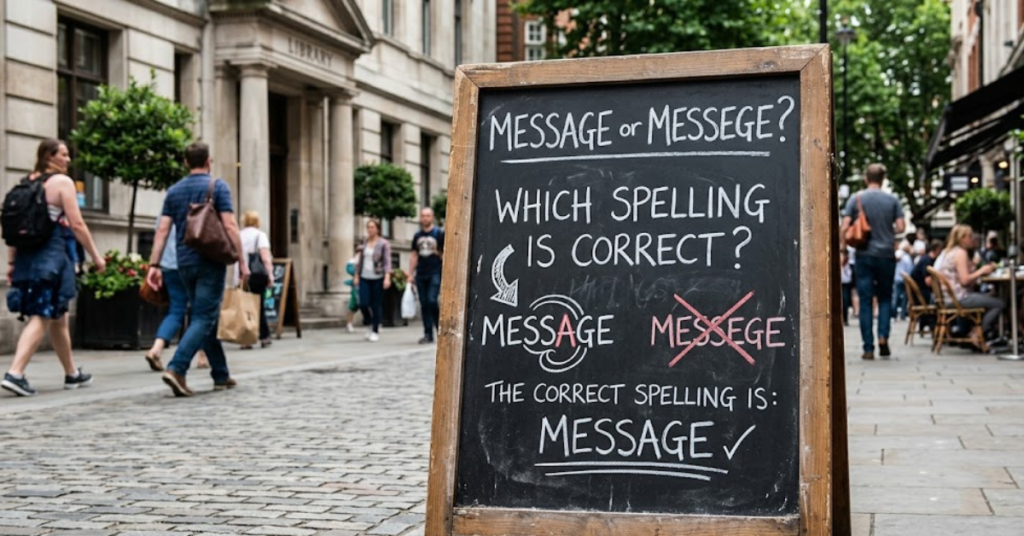

Have you ever typed a word so many times that it suddenly started looking wrong? That’s exactly what happens with messege or message. Many people pause while writing emails, texts, or school assignments wondering which spelling is actually correct.
The short answer is simple: “message” is the correct spelling, while “messege” is a common misspelling. But there’s more to the story than just memorizing the right form. Understanding why people confuse these spellings can help you avoid the mistake permanently.
In this guide, we’ll explore the difference between the two words, explain the correct meaning, look at examples, and answer the most searched questions related to the topic.
Is It Messege or Message?
The correct word is message.
“Messege” is not considered a standard English spelling and does not appear in major dictionaries as an accepted word. It usually happens because of typing errors, pronunciation confusion, or autocorrect mistakes.
Correct Example:
- I received your message this morning.
Incorrect Example:
- I received your messege this morning.
Even though many people accidentally write the incorrect version, professional and academic writing should always use “message.”
Message Meaning Explained
The word “message” refers to a piece of communication sent from one person to another. It can be spoken, written, typed, or delivered digitally.
Common meanings of “message” include:
- A text sent on a phone
- An email or note
- Important information communicated to others
- A symbolic idea in a speech, movie, or story
Examples:
- She sent me a quick message before class.
- The movie had a powerful social message.
- Please leave a message after the beep.
The word is widely used in daily conversation, business communication, and technology.
Why Do People Write “Messege” Instead of “Message”?
Misspellings happen for several reasons. English spelling rules are not always predictable, and some words sound different from how they are written.
Here are the main reasons people confuse the spelling:
1. Pronunciation Confusion
When spoken quickly, “message” can sound like it contains an “e” in the middle instead of an “a.”
2. Typing Mistakes
Fast typing on phones and keyboards often leads to letter swaps.
3. Habit From Similar Words
Words like:
- college
- beverage
- privilege
can influence spelling patterns in the brain, causing confusion.
4. Autocorrect Errors
Sometimes devices fail to correct mistakes immediately, especially if the incorrect spelling has been typed repeatedly before.
How to Remember the Correct Spelling
A simple trick can help you avoid this error forever.
Think of the word this way:
Mess + age = message
The correct spelling uses:
- “a” before the “g”
- not “e”
Another easy memory tip:
A message carries information through the ages.
That small association helps many learners remember the correct structure.
Common Uses of the Word “Message”
The word appears in many everyday situations. Here are the most common contexts where it’s used.
Text Messaging
- Send me a message when you arrive.
- I missed your message earlier.
Social Media
- She replied to my private message.
- Check your direct messages.
Business Communication
- The manager sent an important message to the team.
- His speech delivered a strong leadership message.
Technology and Computing
In apps and software, the term often refers to notifications or communication prompts.
Examples include:
- error message
- voice message
- instant message
Messege or Message Download: What Does It Mean?
Many users search phrases like “messege or message download” because they are looking for:
- messaging apps
- downloaded chat files
- saved text conversations
- notification settings
In those cases, “message download” refers to retrieving or saving communication data from a device or application.
Examples include:
- downloading WhatsApp chat backups
- saving SMS conversations
- exporting email messages
The correct spelling still remains “message.”
Difference Between Message and Similar Words
Some words are closely related but carry different meanings.
Message vs Massage
These are often confused because they look similar.
Message
Communication or information.
- I sent a message yesterday.
Massage
A body treatment involving muscle pressure.
- She booked a massage appointment.
Only one letter changes, but the meanings are completely different.
Examples of Correct Usage
Seeing words in real sentences helps reinforce proper spelling.
Everyday Examples
- Your message made my day.
- Did you read my last message?
- He left a voice message.
- The teacher shared an inspiring message.
Professional Examples
- Please forward the message to the department.
- The CEO delivered a clear message during the meeting.
How Dictionaries Define “Message”
Most dictionaries define “message” as:
A communication sent from one person or group to another.
The word can function as both:
- a noun
- occasionally part of phrasal expressions
It has been used in English for centuries and comes from Old French and Latin roots related to communication and sending information.
Common Grammar Mistakes With Message
Even when people spell the word correctly, they sometimes misuse it grammatically.
Incorrect:
- He message me yesterday.
Correct:
- He messaged me yesterday.
- He sent me a message yesterday.
Notice that “messaged” works as the verb form.
Tips to Avoid Spelling Errors
Here are practical ways to improve spelling accuracy in daily writing:
Read More Often
Regular reading strengthens word recognition naturally.
Use Spell Check
Modern writing tools quickly identify errors.
Slow Down While Typing
Rushing increases spelling mistakes.
Practice Frequently Misspelled Words
Create a small list of words you commonly confuse.
Why Correct Spelling Matters
Spelling mistakes may seem minor, but they can affect:
- professionalism
- credibility
- readability
- first impressions
In formal writing, using the wrong spelling can make emails or documents appear careless.
Correct spelling is especially important in:
- resumes
- academic papers
- business communication
- website content
Frequently Asked Questions
Is “messege” a real word?
No. “Messege” is considered a misspelling of “message.”
Which is correct: messege or message?
“Message” is the correct spelling in English.
What does message mean?
It refers to communication, information, or a note sent from one person to another.
Why do people spell message incorrectly?
Most mistakes happen because of pronunciation confusion, typing habits, or simple spelling errors.
Can message be used as a verb?
Yes. Example:
- She messaged me last night.
What is a direct message?
A private communication sent through social media or messaging platforms.
Conclusion
The confusion between messege or message is extremely common, but the correct spelling is easy to remember once you understand it. “Message” is the proper English word used for communication, texts, notifications, and important information shared between people.
Whether you’re writing an email, sending a text, or creating professional content, using the correct spelling improves clarity and credibility. Small spelling corrections can make a big difference in how your writing is perceived.
If you often mix up similar words, continue practicing commonly confused spellings and pay attention to patterns in English vocabulary. Over time, the correct form becomes second nature.