
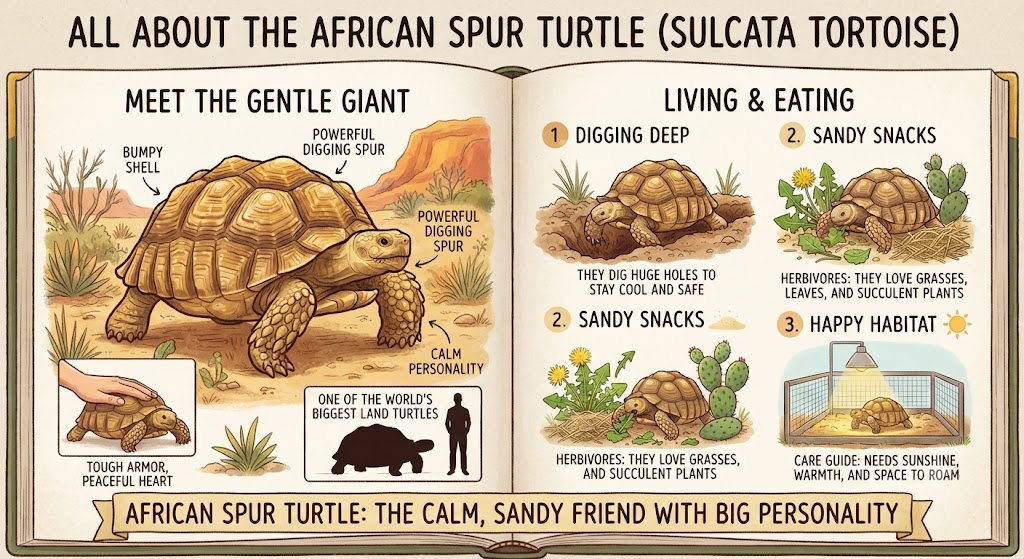

Hello and welcome! Have you ever seen a turtle that looks like it is wearing tiny little armor plates on its legs? Today, we are going to talk about an amazing creature. It is the African Spur Turtle, often known as the sulcata tortoise. These cool reptiles are famous for being some of the biggest land turtles in the entire world. When you see one walking slowly in the sand, it looks just like a tiny, living tank! I have spent a lot of time watching these gentle giants, and their calm way of moving is so relaxing to see. They have tough, bumpy shells and special spurs on their back legs that help them dig big holes in the dirt. Even though they look super tough, they are actually very peaceful animals. People love them because they have big personalities and look like little dinosaurs walking around your backyard. If you want to learn how these sandy friends live, eat, and stay happy, you are in the right spot. Let us jump right in and find out what makes the African spur turtle so super special!
Where Do These Big Turtles Live?
If you go on a big trip to the hot and dry parts of Africa, you might find the home of the African spur turtle. They love places like the edge of the big Sahara Desert and dry grasslands called the Sahel. It is very hot and sunny there most of the time! Because it is so warm, these smart turtles do not like to stay out in the bright sun all day long. Instead, they do a clever trick. They dig very deep tunnels under the ground called burrows. These cool underground holes keep them safe from the burning sun and chilly nights. When I looked into one of these tunnels once, it felt like a secret underground fort! They spend the hottest hours resting down below where it is nice and damp. Then, when the sun goes down and the air cools off, they come back up to look for snacks. Living in such a tough place means they have to be very strong and smart about how they use water and shade every single day.
What Does an African Spur Turtle Eat?
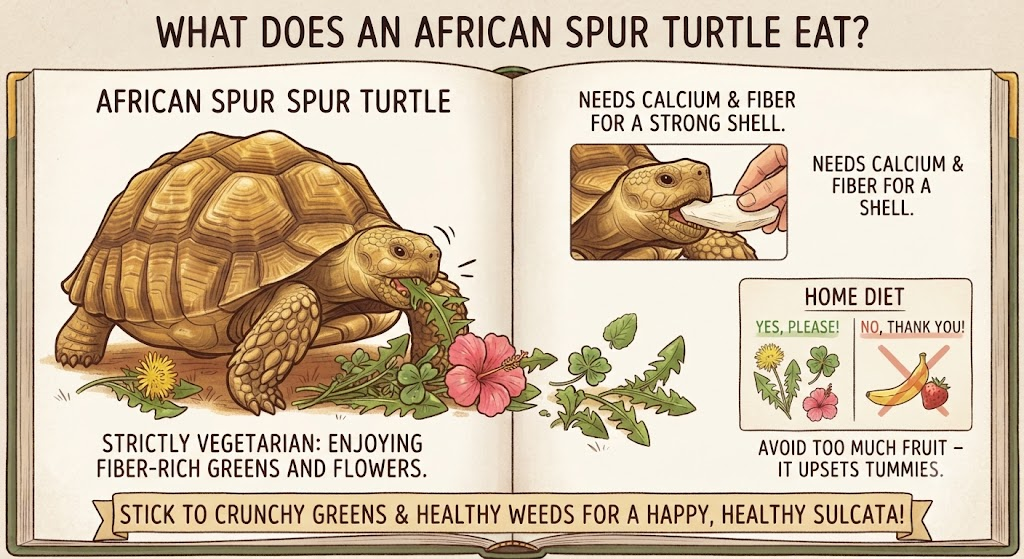
You might wonder what a big reptile like the African spur turtle likes to munch on for lunch. Well, they are strict vegetarians! That means they do not eat meat, bugs, or worms at all. Their favorite food in the wild is dry grass, leafy weeds, and colorful desert flowers. When you watch one eat, it makes a funny crunching sound with its strong beak. They love to chomp on fresh dandelion greens, clover, and hibiscus flowers. It is kind of like having a tiny lawnmower walking around your yard! But you have to be careful what you give them to eat if they live at home. They need lots of fiber and calcium to keep their big shells hard and strong. Giving them too many juicy fruits can make their tummies hurt, just like eating too much candy makes us feel yucky. So, sticking to crunchy greens and healthy weeds is the best way to keep an African spur turtle happy, healthy, and full of bouncy energy all day long.
How Big Do They Get?
One of the most amazing things about the African Spur Turtle is how huge they grow to be. When they hatch from their tiny eggs, they are no bigger than a little coin you keep in your pocket. You can hold a baby one right in the palm of your hand! But do not let that fool you. As they grow up, they eat a lot of food and get bigger and bigger every single year. A grown-up African spur turtle can weigh as much as a big dog, sometimes over one hundred pounds! Their shells can grow to be nearly three feet long. That is longer than your skateboard! Because they get so giant, they need lots of open space to walk around and stretch their legs. You cannot keep a full-grown one in a tiny fish tank in your bedroom. They need a big yard or a special outdoor pen where they can roam around and feel like kings of their very own little kingdom.
Digging Masters of the Dirt
Did you know that the African spur turtle is one of the best diggers in the whole animal kingdom? They have very strong front legs with big, blunt claws made just for moving dirt. When they start digging, the sand just flies everywhere in a fun little cloud! They dig these huge holes not just to hide from the sun, but also to stay warm when it is cold. Some of their underground tunnels can be ten feet deep and thirty feet long. That is longer than a big family car! I once saw a pet turtle dig a hole so deep that E-E-A-T its whole body completely vanished from sight. It was like magic! This cool digging habit helps them find moisture deep in the ground, too. It is their special superpower for surviving in dry places where rain does not fall very often. Watching them dig is always a fun and surprising show for anyone who loves watching animals do their natural jobs.
The Secret Behind the Spurs
Have you ever wondered why the African spur turtle has that funny name? It is all because of the special bumps on their back legs! On each of their rear thighs, they have two or three sharp, pointy bumps that look like little spurs on a cowboy boot. People used to think they used these spurs to fight, but that is not really true. Scientists think they use them to feel the ground or help steady themselves when they are climbing up sandy hills. Sometimes, a male turtle might use his back legs to push against another turtle in a friendly pushing match. When you touch their skin, those little spurs feel hard like a fingernail, but they are totally harmless. They just add to the cool, prehistoric look of the turtle. It makes them look like tiny armored knights ready for a grand adventure in the backyard sandbox. Every little detail on their body has a special job to do!
How Long Do They Live?
Get ready for a big surprise because the African spur turtle can live for a super, duper long time! Dogs and cats live for many years, but these amazing tortoises can easily outlive us all. A healthy African spur turtle can live for seventy, eighty, or even one hundred years! That means a baby turtle born today could still be walking around when you are a very old grandparent. Because they live for so long, owning one is a lifetime promise. You have to make plans for who will take care of your shelled buddy when you grow up and move to a new house. I always tell people that getting one of these turtles is like adding a permanent member to your family tree. They are quiet friends who watch you grow up, go to school, and change over the years. Knowing they will be around for so long makes every single moment you spend watching them walk in the grass feel extra special and important.
Keeping Your Turtle Happy and Warm
If you want to help an African spur turtle live a great life, you have to make sure its home is warm and dry. These animals hate cold weather and damp air. If they get too cold, they can get a bad tummy ache or a sniffly nose, just like us when we play in the snow without a coat. When they live indoors during chilly winter months, they need special heat lamps that shine down like the desert sun. They also need a special light that gives them sunshine vitamins to keep their shells from getting soft. Keeping their bedding clean and dry with soft straw or Timothy hay is also a very big rule. When their room is nice and warm, they will walk around happily, munch their greens, and nod their little heads at you. Taking good care of them is a fun job that teaches us how to be responsible and kind to living creatures every day.
Fun Personality Traits
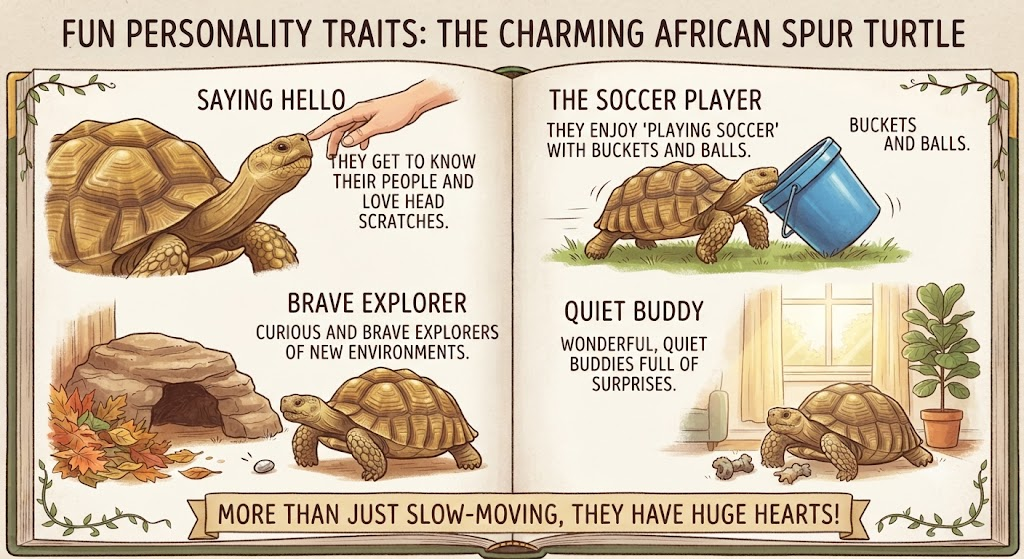
You might think turtles are boring because they move so slowly, but the African spur turtle has a huge heart and a fun personality! They actually get to know the people who feed them. When you walk near their pen, they might stretch out their long necks and walk right over to say hello. They love getting their heads gently scratched right near their cute little eyes. Sometimes, they even get brave enough to chase a bright red ball around the yard just for fun. I watched one try to push a big plastic bucket across the grass once, and it looked like it was playing a game of soccer! They are very curious and love to explore new piles of leaves or interesting rocks. Having one around brings so much joy because you start to see their little quirks and funny habits. They are truly full of surprises and make wonderful, quiet buddies for your home.
Summary Table of Facts
Let us look at a fun detailing table to check out all the cool facts about the African spur turtle in one easy place!
| Feature | Quick Fact |
| Main Name | African Spur Turtle / Sulcata Tortoise |
| Home | Hot deserts and grasslands in Africa |
| Diet | Grass, weeds, and leafy green plants |
| Adult Weight | Up to 100 pounds or more |
| Lifespan | Up to 70 to 100 years |
| Superpower | Digging huge underground tunnels |
Frequently Asked Questions
How big does an African spur turtle get?
They can grow very large and heavy, weighing up to one hundred pounds or even more as adults!
What do African spur turtles eat?
They eat only plants, like fresh grass, dandelion greens, clover, and safe leafy weeds.
Do they like to dig holes?
Yes! They are master diggers and love to make deep underground tunnels to hide from the hot sun.
How long do these turtles live?
They can live a very long time, sometimes reaching up to seventy or even one hundred years of age!
Are they friendly pets?
They are very calm and gentle, and they can learn to recognize the people who bring them their favorite food.
Why do they have spurs on their legs?
Those hard bumps on their back legs help them steady themselves in the sand and climb up hills.
Conclusion
We have learned so much about the amazing African spur turtle today! From their giant shells and deep dirt tunnels to their funny personalities and super-long lifespans, these desert friends are truly wonderful creatures. Taking care of them or watching them in the wild teaches us how amazing nature really is.We should always respect their needs for warmth, sunshine, and fresh greens. What was your favorite fun fact about these armored giants? Do you think you would ever want to watch one dig a giant hole in the sand? Drop a comment below, share your own stories about meeting cool reptiles, or go read more fun animal guides today!