
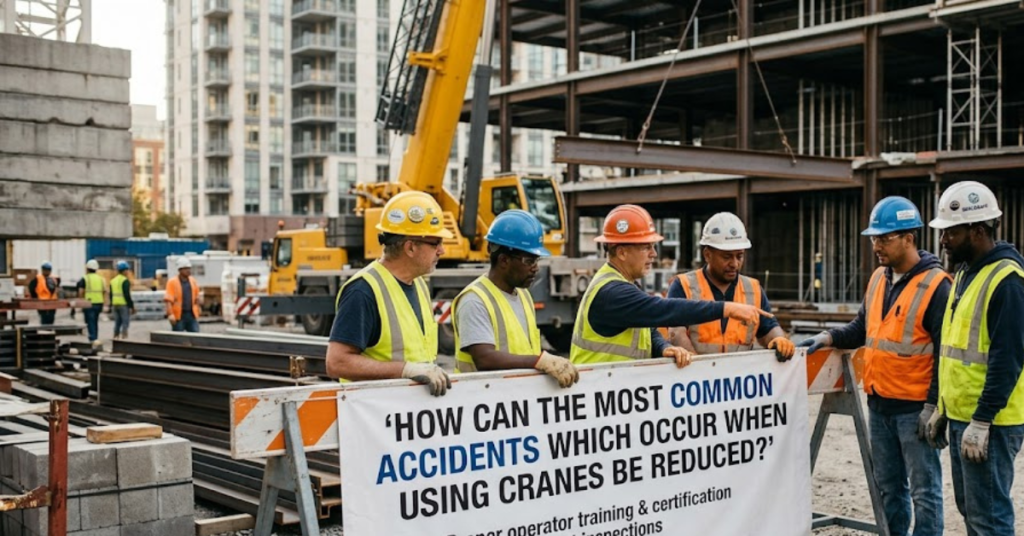

Imagine a busy construction site where a crane is lifting several tons of steel overhead. Everything appears routine—until a small mistake leads to a dropped load, equipment damage, or even a serious injury. Crane accidents remain among the most dangerous incidents in construction, manufacturing, shipping, and industrial operations worldwide.
This raises an important question: how can the most common accidents which occur when using cranes be reduced? The answer lies in a combination of proper training, thorough planning, regular inspections, effective communication, and strict adherence to safety procedures.
In this guide, you’ll learn about the most common crane-related accidents, why they happen, and the practical steps organizations can take to prevent them. Whether you’re a crane operator, site supervisor, safety manager, or business owner, understanding these safety principles can help save lives and protect valuable equipment.
Why Crane Safety Matters
Cranes are among the most powerful machines used on worksites. They can lift enormous loads, reach significant heights, and operate in challenging environments.
However, their power also creates risk. A single mistake can result in:
- Serious injuries
- Fatal accidents
- Structural damage
- Project delays
- Financial losses
- Legal liabilities
Reducing crane accidents isn’t simply about compliance—it’s about creating a safer workplace for everyone involved.
Understanding the Most Common Crane Accidents
Before exploring prevention methods, it’s important to understand the incidents that occur most frequently.
Load Drops and Falling Objects
One of the most common crane accidents involves loads slipping, detaching, or falling during lifting operations.
Common causes include:
- Improper rigging
- Worn lifting equipment
- Overloaded cranes
- Sudden crane movements
- Equipment failure
Even relatively small falling objects can cause severe injuries.
Crane Tip-Overs
A crane tip-over occurs when the machine becomes unstable and overturns.
Factors contributing to tip-overs include:
- Exceeding load limits
- Uneven ground conditions
- Improper setup
- Strong winds
- Incorrect boom positioning
Tip-overs often result in catastrophic damage and significant safety hazards.
Contact with Power Lines
Electrocution remains one of the leading causes of crane-related fatalities.
Many incidents occur when:
- Booms contact overhead power lines
- Loads swing into electrical conductors
- Operators misjudge safe clearance distances
Because electricity can arc through the air, direct contact isn’t always necessary for a serious incident to occur.
Equipment Failure
Mechanical failures can lead to dangerous situations involving:
- Hoist malfunctions
- Hydraulic failures
- Brake system issues
- Wire rope damage
- Structural defects
Regular maintenance is critical to minimizing these risks.
Worker Struck-By Incidents
Workers on the ground may be struck by:
- Swinging loads
- Moving crane components
- Detached rigging equipment
- Falling materials
These incidents often occur due to poor communication and inadequate exclusion zones.
How Can the Most Common Accidents Which Occur When Using Cranes Be Reduced?
The most effective safety programs combine multiple preventive measures rather than relying on a single solution.
Invest in Comprehensive Operator Training
Proper training is the foundation of crane safety.
Operators should understand:
- Load charts
- Crane capacities
- Equipment limitations
- Hazard recognition
- Emergency procedures
Training should be ongoing rather than a one-time event.
Benefits of Continuous Training
Organizations that regularly train operators often experience:
- Fewer accidents
- Improved efficiency
- Better hazard awareness
- Reduced equipment damage
Experienced operators still benefit from refresher courses and updated safety practices.
Conduct Thorough Pre-Lift Planning
Many crane accidents occur because lifts are not properly planned.
Create a Detailed Lift Plan
Before operations begin, teams should identify:
- Load weight
- Lift path
- Ground conditions
- Weather forecasts
- Nearby hazards
- Personnel responsibilities
Complex lifts often require formal engineering reviews.
Assess Site Conditions
Ground stability directly affects crane safety.
Site assessments should evaluate:
- Soil strength
- Slopes
- Underground utilities
- Surface obstructions
- Traffic patterns
A stable foundation significantly reduces tip-over risks.
Perform Regular Crane Inspections
Routine inspections help identify issues before they become dangerous failures.
Daily Inspections
Operators should inspect:
- Hooks
- Wire ropes
- Safety devices
- Hydraulic systems
- Controls
- Tires or tracks
Any defects should be reported immediately.
Scheduled Maintenance Programs
Preventive maintenance reduces unexpected breakdowns.
Maintenance schedules should include:
- Component testing
- Lubrication
- Structural inspections
- Replacement of worn parts
- Calibration checks
Proper maintenance extends equipment life while improving safety.
Follow Load Capacity Limits
Overloading remains a major cause of crane incidents.
Understand Load Charts
Every crane has manufacturer-specified load limits based on:
- Boom length
- Radius
- Configuration
- Operating conditions
Operators should never rely on estimates.
Verify Load Weight
Accurate weight calculations are essential.
When weight information is uncertain:
- Use certified load data
- Consult engineering documents
- Employ weighing systems
Guesswork can lead to dangerous situations.
Improve Communication on the Worksite
Clear communication reduces confusion and prevents mistakes.
Use Qualified Signal Persons
Signal persons help operators maintain awareness when visibility is limited.
Responsibilities include:
- Directing movements
- Communicating hazards
- Monitoring load positioning
Consistency in signals is essential.
Utilize Modern Communication Tools
Many worksites use:
- Two-way radios
- Headsets
- Digital communication systems
- Visual signaling devices
Reliable communication improves coordination and safety.
Establish Exclusion Zones
Workers should remain clear of active lifting areas.
Create Controlled Access Areas
Safety zones help prevent struck-by incidents.
These zones should:
- Be clearly marked
- Restrict unauthorized access
- Move as lifting operations progress
Ground personnel should never stand beneath suspended loads.
Use Spotters When Necessary
Spotters help identify hazards that operators may not see.
Their presence is especially valuable in crowded or complex environments.
Monitor Weather Conditions
Weather plays a significant role in crane safety.
Wind Hazards
Strong winds can:
- Destabilize loads
- Increase swing movement
- Reduce operator control
Weather monitoring should occur throughout operations.
Rain, Snow, and Ice
Adverse weather can affect:
- Visibility
- Ground stability
- Equipment performance
- Worker footing
Operations may need to be delayed when conditions become unsafe.
Implement Rigging Best Practices
Improper rigging contributes to numerous lifting accidents.
Use Qualified Riggers
Rigging personnel should understand:
- Load balancing
- Sling selection
- Attachment methods
- Inspection procedures
Inspect Rigging Equipment
Before each lift, inspect:
- Slings
- Shackles
- Hooks
- Chains
- Connectors
Damaged rigging should be removed from service immediately.
Leverage Modern Crane Safety Technology
Technological advancements have significantly improved crane safety.
Load Monitoring Systems
These systems help operators:
- Track load weights
- Prevent overloading
- Monitor crane performance
Anti-Collision Systems
In busy environments, anti-collision technology helps prevent contact between cranes, structures, and obstacles.
Telematics and Remote Monitoring
Modern systems provide:
- Maintenance alerts
- Equipment diagnostics
- Operational data
- Safety reporting
Data-driven decisions can reduce accident risks.
Building a Strong Safety Culture
Equipment and procedures matter, but workplace culture plays an equally important role.
Encourage Hazard Reporting
Workers should feel comfortable reporting:
- Unsafe conditions
- Near misses
- Equipment concerns
- Procedural issues
Early reporting often prevents larger incidents.
Leadership Commitment
When management prioritizes safety, employees are more likely to follow established protocols.
Strong leadership creates accountability throughout the organization.
Real-World Example: Preventing a Potential Crane Incident
Consider a construction project involving a large HVAC unit lift.
Before the lift:
- Engineers verified load weight.
- Operators reviewed load charts.
- The site was inspected.
- Exclusion zones were established.
- Wind conditions were monitored.
- A qualified signal person coordinated movements.
During setup, inspectors discovered a damaged sling. Because the issue was identified before lifting began, the sling was replaced and a potentially serious accident was avoided.
This example demonstrates how multiple safety measures work together to reduce risk.
Key Takeaways
- Crane accidents are often preventable through planning, training, and inspections.
- Common incidents include load drops, tip-overs, power line contact, and struck-by injuries.
- Proper operator training significantly reduces risk.
- Regular maintenance and inspections help prevent equipment failures.
- Effective communication improves coordination during lifting operations.
- Weather monitoring and load verification are critical safety measures.
- Strong safety cultures encourage proactive hazard management.
Frequently Asked Questions
What is the most common cause of crane accidents?
Human error is one of the leading contributors to crane accidents. Poor planning, inadequate training, communication failures, and ignoring safety procedures frequently play a role.
How can crane tip-over accidents be prevented?
Tip-overs can be reduced by following load charts, ensuring stable ground conditions, using proper crane setup procedures, and avoiding overload situations.
Why is power line contact so dangerous for cranes?
Electricity can travel through crane components and suspended loads, creating severe electrocution hazards for operators and nearby workers.
How often should cranes be inspected?
Crane inspections should occur daily before operation, with more comprehensive inspections and maintenance performed according to manufacturer recommendations and workplace regulations.
How can the most common accidents which occur when using cranes be reduced on construction sites?
Construction sites can reduce accidents through operator certification, lift planning, exclusion zones, equipment inspections, weather monitoring, and strong communication practices.
What role does technology play in crane safety?
Modern safety technologies such as load monitoring systems, anti-collision devices, and telematics help operators identify hazards and prevent accidents before they occur.
Conclusion
Understanding how can the most common accidents which occur when using cranes be reduced is essential for anyone involved in lifting operations. While cranes are indispensable tools across construction, manufacturing, logistics, and infrastructure projects, they also present significant risks when safety measures are ignored.
The most effective accident-prevention strategy combines skilled operators, detailed lift planning, regular inspections, proper rigging, clear communication, and a workplace culture that prioritizes safety above speed. By applying these best practices consistently, organizations can reduce injuries, prevent costly incidents, and create safer, more productive worksites.
As crane technology and safety standards continue to evolve, staying informed and committed to continuous improvement remains the best investment any organization can make.