
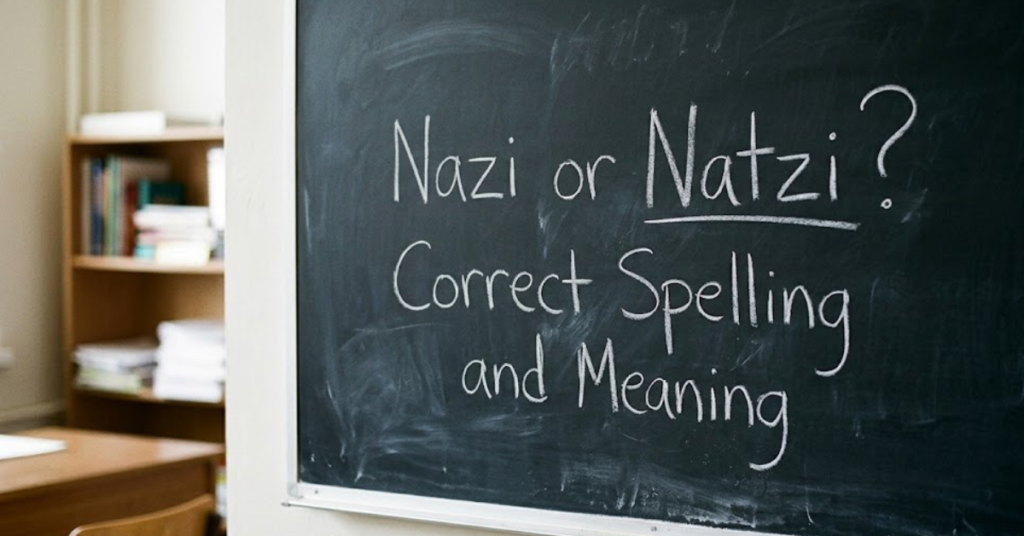

If you’ve ever searched online for “natzi or nazi,” you’re not alone. Many people wonder whether the correct spelling is natzi or nazi, especially because pronunciation can make the words sound similar. The truth is simple: “Nazi” is the correct spelling, while “natzi” is a common misspelling.
But the topic goes much deeper than spelling alone. The word “Nazi” is tied to one of the darkest periods in modern history — the rise of Nazi Germany under Adolf Hitler and the devastating events of World War II and the Holocaust.
In this article, you’ll learn:
- The correct spelling and pronunciation
- The meaning of the term “Nazi”
- The history of Nazi Germany
- Nazi symbols, flags, and salutes
- Why the ideology remains controversial today
- Frequently asked questions people search online
Is It Natzi or Nazi?
The correct spelling is Nazi.
“Natzi” is simply a spelling mistake that appears because some people pronounce the word with a stronger “t” sound. In English and German, however, the accepted spelling has always been Nazi.
Quick Answer
| Term | Correct? | Meaning |
| Nazi | Yes | Member/supporter of the National Socialist German Workers’ Party |
| Natzi | No | Misspelling of “Nazi” |
So if you’re asking:
- Is it natzi or nazi?
- Natzi or nazi correct spelling?
- Is it pronounced natzi or nazi?
The answer is always: Nazi.
Nazi Meaning: What Does “Nazi” Mean?
The term “Nazi” comes from the German word:
Nationalsozialist
This referred to members of the National Socialist German Workers’ Party (Nationalsozialistische Deutsche Arbeiterpartei, or NSDAP).
The Nazi Party was led by Adolf Hitler and ruled Germany from 1933 to 1945.
Core Nazi Ideology Included:
- Extreme nationalism
- Dictatorship and authoritarian rule
- Racism and antisemitism
- Militarism
- Expansion of German territory
- Belief in “Aryan racial superiority”
These beliefs eventually contributed to the outbreak of World War II and the Holocaust.
The Rise of Nazi Germany
What Was Nazi Germany?
“Nazi Germany” refers to Germany during Hitler’s rule between 1933 and 1945. This era is also called the Third Reich.
During this time, the Nazi government:
- Eliminated political opposition
- Controlled the media and education
- Expanded military power
- Passed discriminatory laws
- Persecuted Jewish people and minorities
The regime used propaganda heavily to gain support and silence critics.
How Hitler and the Nazis Came to Power
After World War I, Germany faced:
- Economic collapse
- Massive unemployment
- Political instability
- Public anger over the Treaty of Versailles
Hitler promised to restore German pride and economic strength. His speeches and propaganda attracted millions of supporters.
In 1933, Hitler became Chancellor of Germany, and shortly afterward, the Nazi Party established a dictatorship.
Nazi Symbols and Their Meaning
One of the most searched topics online is the natzi or nazi symbol query. Again, the correct term is “Nazi symbol.”
The Swastika
The most recognizable Nazi symbol was the swastika.
Originally, the swastika existed for centuries in several cultures and religions as a symbol of peace or spirituality. However, the Nazis adopted and transformed it into a symbol of hate, antisemitism, and fascism.
Today, the Nazi swastika is widely associated with:
- Hate groups
- White supremacy
- Extremism
- Genocide
In many countries, displaying Nazi symbols is restricted or illegal.
The Nazi Flag
The Nazi flag featured:
- A red background
- A white circle
- A black swastika in the center
The colors were intentionally chosen to create a bold and emotionally powerful design for propaganda purposes.
Why the Flag Matters Historically
The Nazi flag became a symbol of:
- Dictatorship
- Militarism
- Racial ideology
- Oppression during World War II
Today, it is viewed negatively across most of the world because of its connection to war crimes and genocide.
The Nazi Salute
Another common search phrase is natzi or nazi salute.
The Nazi salute involved extending the right arm forward while saying phrases like:
- “Heil Hitler”
- “Sieg Heil”
The salute symbolized loyalty to Hitler and the Nazi regime.
Modern Legal Status
In several European countries, publicly performing the Nazi salute is illegal because it promotes extremist ideology and hate speech.
Nazi Signs and Propaganda
The Nazi regime used signs, posters, films, and speeches to influence public opinion.
Common Nazi Propaganda Techniques
- Emotional messaging
- Fear-based politics
- National pride campaigns
- Blaming minority groups for economic problems
- Repetition of slogans
Propaganda was central to Nazi control over society.
Why People Still Search “Natzi or Nazi”
There are several reasons why people commonly type “natzi” instead of “nazi”:
1. Pronunciation Confusion
Some accents make “Nazi” sound like “Natzi.”
2. Typing Errors
Autocorrect and spelling mistakes are common.
3. Lack of Historical Familiarity
Many younger internet users are learning the term for the first time through social media, movies, or online discussions.
Is It Pronounced Natzi or Nazi?
The standard English pronunciation is:
“NAHT-see” or “NAH-tsee”
Even though some people hear a “t” sound in the middle, the word is still spelled Nazi.
What Is the Plural of Nazi?
The plural form is:
- Nazi → singular
- Nazis → plural
Examples
- “A Nazi official”
- “Several Nazis were tried after World War II”
So if you search for natzi or nazi plural, the correct plural is Nazis.
The Impact of Nazi Germany on History
The consequences of Nazi rule were catastrophic.
Major Historical Effects
- Over 70 million deaths during World War II
- The Holocaust and murder of six million Jews
- Destruction across Europe
- Long-lasting political and social trauma
- Creation of modern human rights laws
The fall of Nazi Germany in 1945 marked the end of Hitler’s regime, but the lessons remain deeply important today.
Why Learning About Nazis Still Matters
Studying Nazi history helps people understand:
- The dangers of extremism
- How propaganda influences societies
- The risks of authoritarian governments
- Why human rights protections matter
History education is essential to preventing similar atrocities in the future.
FAQs About Nazi or Natzi
Is it natzi or nazi?
The correct spelling is Nazi. “Natzi” is incorrect.
What does Nazi mean?
“Nazi” refers to a member or supporter of the National Socialist German Workers’ Party in Germany under Adolf Hitler.
What was Nazi Germany?
Nazi Germany was Germany under Hitler’s dictatorship from 1933 to 1945.
What is the Nazi symbol?
The main Nazi symbol was the swastika, which became associated with hate, fascism, and antisemitism.
What was the Nazi salute?
The Nazi salute involved extending the right arm while expressing loyalty to Hitler and the Nazi regime.
Is “Natzi” ever correct?
No. “Natzi” is always considered a misspelling of “Nazi.”
How do you pronounce Nazi?
It is commonly pronounced “NAHT-see” or “NAH-tsee.”
What is the plural of Nazi?
The plural form is Nazis.
Conclusion
When it comes to natzi or nazi, the correct spelling is clearly Nazi. While the misspelling “natzi” appears frequently online, it is not historically or linguistically accurate.
More importantly, understanding the meaning behind the word “Nazi” involves learning about one of history’s most destructive political movements. From Nazi Germany and its symbols to propaganda and World War II, the topic carries enormous historical significance.
By learning the facts and understanding the history, readers can better recognize the dangers of extremism, misinformation, and authoritarian ideology in the modern world.
If you found this guide helpful, consider exploring more articles about World War II history, political movements, and historical terminology to deepen your understanding.