
Ever paused mid-sentence wondering, “Is it treck or trek?” You’re not alone. This common spelling confusion trips up writers, students, and even seasoned English speakers. The truth is simple—but understanding why makes it easier to remember forever.
In this guide, we’ll break down treck or trek meaning, correct spelling, synonyms, and even touch on fun uses like “trek” in pop culture and Halloween themes. By the end, you’ll never second-guess yourself again.
Treck or Trek: Which One Is Correct?
Let’s clear this up right away:
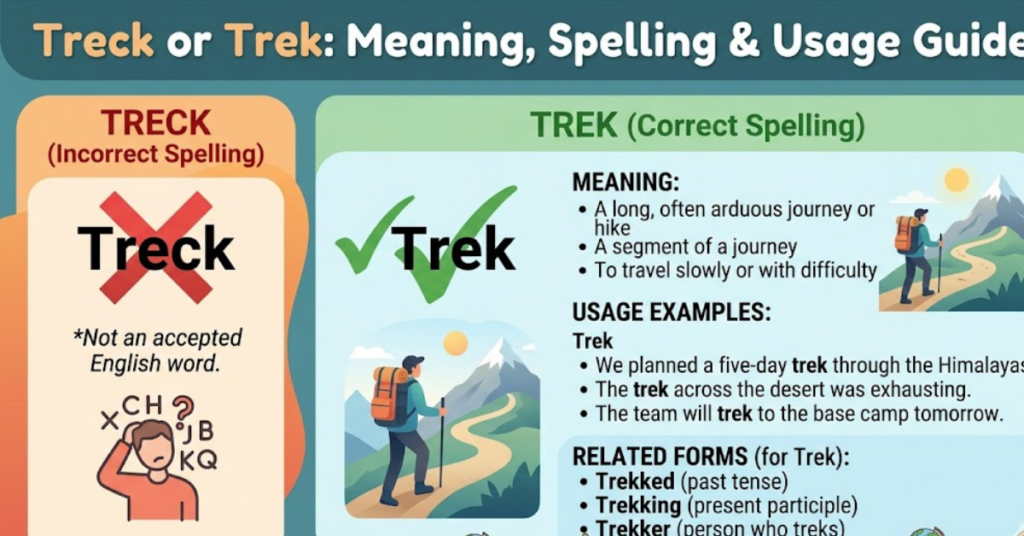
“Trek” is the correct spelling
“Treck” is a misspelling
If you’ve been using “treck,” it’s a very common mistake—but it’s not recognized in standard English dictionaries.
Why the Confusion?
The confusion around treck or trek spelling often comes from:
- Words like check or neck influencing spelling habits
- Pronunciation similarities
- Lack of exposure to the word in writing
But unlike those words, “trek” follows a simpler spelling rule—no extra “c” needed.
Trek Meaning Explained (Simple & Clear)
The word “trek” refers to:
A long, often challenging journey—usually on foot.
Common Contexts
You’ll see “trek” used in different situations:
- Travel & Adventure: Hiking through mountains or forests
- Figurative Use: A difficult life journey
- Historical Use: Migration or long expeditions
Example Sentences
- “We went on a week-long trek through the mountains.”
- “Starting a business can feel like a long trek.”
So when thinking about treck or trek meaning, always remember—it’s tied to effort, distance, and endurance.
Trek Synonyms (Expand Your Vocabulary)
Looking for a treck or trek synonym? Here are some great alternatives depending on context:
For Physical Journeys:
- Hike
- Expedition
- Journey
- March
- Trail
For Figurative Use:
- Struggle
- Process
- Path
- Pursuit
Each synonym carries a slightly different tone, so choose based on what you’re trying to express.
Is It Treck or Trek in Everyday Usage?
Let’s answer the question clearly:
Is it treck or trek? It’s always “trek.”
You’ll find “trek” used in:
- Travel blogs
- Adventure documentaries
- Everyday conversations
- Books and media
Quick Tip to Remember
Think of “trek” as “travel”—both are short, simple, and don’t include an extra “c.”
Trek in Pop Culture & Fun Uses
The word “trek” isn’t just about hiking—it’s widely used in entertainment and creative themes.
Trek in Entertainment
- Sci-fi fans instantly recognize it from iconic franchises
- It symbolizes exploration and discovery
Trek or Trek Halloween Ideas
If you’re exploring treck or trek halloween themes, “trek” can inspire:
- Adventure-themed costumes
- Explorer outfits
- Sci-fi character concepts
- Survival or wilderness party themes
It adds a sense of journey and excitement to any creative idea.
Common Mistakes to Avoid
Here are quick pitfalls related to treck or trek spelling:
Writing “treck” in formal content
Assuming both spellings are acceptable
Mixing it up in professional writing
Always double-check your spelling
Stick with “trek” in all contexts
Quick Comparison Table
| Word | Correct? | Meaning |
| Trek | Yes | A long, difficult journey |
| Treck | No | Incorrect spelling |
FAQs About Treck or Trek
1. What is the correct spelling: treck or trek?
The correct spelling is “trek.” “Treck” is not a valid English word.
2. What does trek mean?
A trek is a long and often difficult journey, typically on foot.
3. Why do people write “treck”?
It’s usually due to spelling habits influenced by similar words like “check” or “deck.”
4. Can “trek” be used metaphorically?
Yes, it often describes challenging life journeys or processes.
5. What are some synonyms for trek?
Common synonyms include hike, journey, expedition, and march.
6. Is “trek” used in pop culture?
Absolutely—it’s widely used in movies, shows, and themed events, especially in adventure and sci-fi contexts.
Conclusion
When it comes to treck or trek, the answer is straightforward: “trek” is the only correct spelling. It represents more than just a journey—it captures the idea of effort, endurance, and exploration.
To avoid mistakes, keep it simple:
- Drop the extra “c”
- Remember its meaning
- Use it confidently in writing and speech
Next time you’re describing an adventure—whether it’s a mountain hike or a personal challenge—you’ll know exactly which word to use.
And now that you’ve mastered this, why not explore more common word confusions and sharpen your English even further?