
Ever tripped over nothing and joked about being a clutz? Or was it klutz? If you’ve ever paused mid-sentence wondering about clutz or klutz, you’re not alone. This small spelling dilemma confuses a lot of people, especially since both versions seem to appear in casual writing.
In this guide, we’ll break down the correct spelling, where the word comes from, and how to use it naturally in everyday language. By the end, you’ll never second-guess yourself again.
Clutz or Klutz: What’s the Correct Spelling?
Let’s settle it right away:
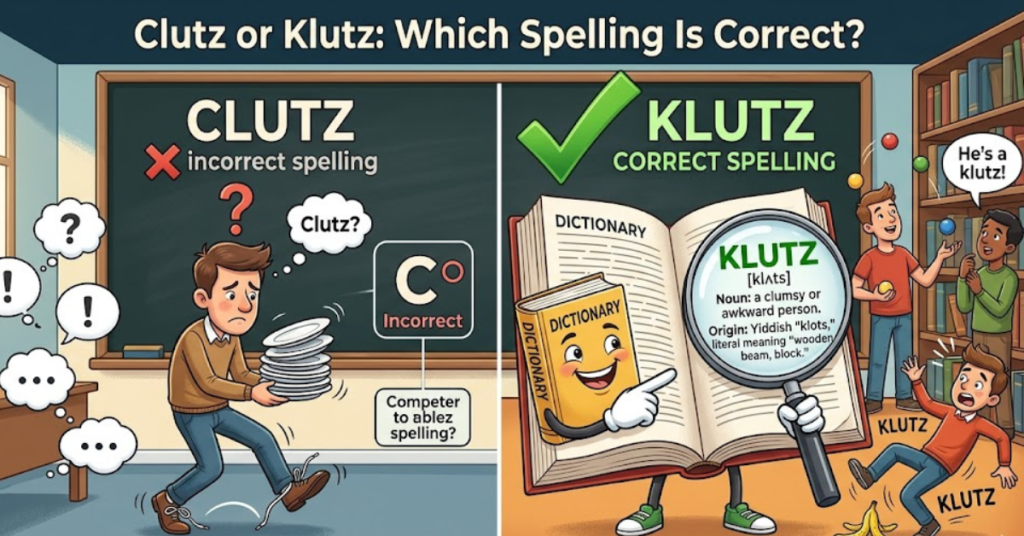
The correct spelling is klutz.
The version “clutz” is considered a misspelling, even though it’s commonly used in informal writing. If you’re aiming for accuracy—especially in professional or academic contexts—klutz is the word you should stick with.
What Does “Klutz” Mean?
A klutz is someone who is:
- Clumsy
- Accident-prone
- Lacking coordination
It’s often used in a lighthearted or humorous way rather than as an insult.
Example Sentences:
- “I spilled coffee on my shirt again—I’m such a klutz.”
- “He’s a bit of a klutz, but he means well.”
Why Do People Confuse Clutz or Klutz?
The confusion around clutz or klutz spelling comes down to pronunciation and familiarity.
Here’s why:
- The word is pronounced with a hard “k” sound, which can be written as “c” or “k” in English.
- English has many inconsistent spelling patterns.
- People often rely on phonetics when unsure, leading to “clutz.”
The Origin of “Klutz”
The word klutz has roots in Yiddish, a language historically spoken by Ashkenazi Jews. It comes from the Yiddish word klots, meaning:
- A wooden block
- A clumsy or awkward person
Over time, the term made its way into English, keeping both its meaning and its distinctive spelling with a “k.”
When Should You Use “Klutz”?
Use klutz in both casual and semi-formal contexts when describing someone’s clumsiness in a non-harsh way.
Common Situations:
- Light jokes among friends
- Self-deprecating humor
- Storytelling or casual writing
Avoid using it:
- In highly formal or sensitive contexts where it might sound unprofessional
Clutz or Klutz Spelling: Quick Comparison
| Version | Correct? | Usage |
| Klutz | Yes | Standard, correct spelling |
| Clutz | No | Informal misspelling |
Related Words and Synonyms
If you want variety in your writing, here are some alternatives to klutz:
- Butterfingers
- Oaf
- Fumbler
- Bungler
- Clumsy person
Each carries a slightly different tone, so choose based on context.
Common Mistakes to Avoid
When dealing with is it clutz or klutz, watch out for these:
- Using “clutz” in formal writing
- Assuming both spellings are interchangeable
- Overusing the word in negative contexts
Remember, tone matters just as much as spelling.
FAQs
1. Is it clutz or klutz?
The correct spelling is klutz. “Clutz” is a common but incorrect variation.
2. Is “klutz” offensive?
Not usually. It’s generally playful, but tone and context matter. Avoid using it in situations where it might feel insulting.
3. Why is it spelled with a “k”?
Because it comes from Yiddish, where the original word uses a “k” sound and spelling.
4. Can I ever use “clutz”?
It’s best to avoid it, especially in professional writing. Stick with “klutz” for correctness.
5. Is “klutz” used worldwide?
Yes, it’s widely understood in English-speaking countries, though more common in American English.
Conclusion
So, when it comes to clutz or klutz, the answer is clear: klutz is the correct spelling. While “clutz” might seem logical based on pronunciation, it doesn’t hold up in standard English usage.
The next time you trip over your own feet or knock something over, you can confidently call yourself a klutz—and spell it right, too.
If you enjoy clearing up tricky word confusions like this, keep exploring similar topics to sharpen your writing and communication skills