
Ever paused mid-sentence and wondered whether to write disregulated or dysregulated? You’re not alone. This tiny spelling difference trips up students, writers, and even professionals. The confusion isn’t just about grammar—it also affects clarity, credibility, and even SEO.
In this article, we’ll break down is it disregulated or dysregulated, explain the correct usage, explore meanings in different contexts, and clear up how disregulated or dysregulated UK spelling works. By the end, you’ll know exactly which form to use—and why.
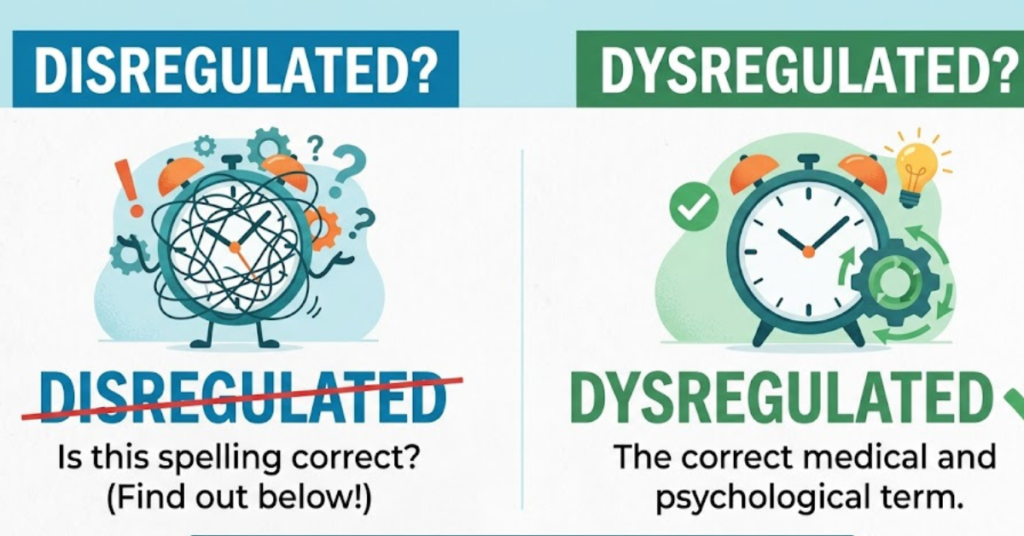
Disregulated or Dysregulated: What’s the Correct Spelling?
Let’s settle it right away:
The correct spelling is “dysregulated.”
“Disregulated” is incorrect and not recognized in standard English.
Why “Dysregulated” Is Correct
The prefix “dys-” comes from Greek and means:
- Difficult
- Abnormal
- Impaired
So, dysregulated literally means poorly regulated or functioning abnormally.
On the other hand, “disregulated” looks like it follows the common “dis-” prefix pattern, but it’s simply not a standard or accepted word.
What Does Dysregulated Mean?
At its core, dysregulated describes something that isn’t functioning properly or is out of balance.
Common Contexts
1. Mental Health
In psychology, dysregulation refers to difficulty managing emotions.
Examples:
- Emotional outbursts
- Anxiety spikes
- Mood instability
2. Biological Systems
In medicine, it often describes systems in the body that aren’t working correctly.
Examples:
- Hormonal imbalance
- Immune system dysfunction
3. Behavioral Patterns
It can also refer to difficulty controlling behavior.
Examples:
- Impulsivity
- Poor stress response
Why Do People Say “Disregulated”?
The confusion between disregulated or dysregulated usually comes from familiarity with the prefix “dis-”, which appears in many English words like:
- Disconnected
- Disorganized
- Disqualified
Because of this pattern, “disregulated” feels natural—even though it’s incorrect.
Key Takeaway
- “Dis-” = absence or reversal
- “Dys-” = dysfunction or abnormality
That distinction is why dysregulated is the correct form.
Disregulated or Dysregulated UK: Is There a Difference?
If you’re wondering about disregulated or dysregulated UK, here’s the simple answer:
There is no difference.
Both UK and US English use “dysregulated.”
Unlike words such as “colour” vs. “color,” this term does not change across regions.
How to Use Dysregulated Correctly
Using the word naturally can make your writing clearer and more professional.
Example Sentences
- “He has a dysregulated stress response during high-pressure situations.”
- “The patient’s sleep cycle is severely dysregulated.”
- “Emotional dysregulation can impact relationships and decision-making.”
Writing Tips
- Use it when describing imbalance or dysfunction
- Avoid overusing it—keep language varied
- Pair it with context (emotional, biological, behavioral)
Common Mistakes to Avoid
Here are some quick pitfalls to watch for:
- Writing “disregulated” instead of “dysregulated”
- Assuming UK spelling is different
- Using the word without context
Quick Comparison Table
| Term | Correct? | Meaning |
| Dysregulated | Yes | Impaired or not functioning well |
| Disregulated | No | Not a valid English word |
FAQs
1. Is it disregulated or dysregulated?
The correct form is dysregulated. “Disregulated” is a misspelling and should be avoided.
2. What does dysregulated mean in simple terms?
It means something is not working properly or is out of balance, especially in emotional, biological, or behavioral systems.
3. Is “disregulated” ever acceptable?
No, it’s not recognized in standard English dictionaries or professional writing.
4. Does UK English use a different spelling?
Both UK and US English still consider the correct form dysregulated.
5. Where is dysregulated commonly used?
You’ll often see it in:
- Psychology
- Medicine
- Neuroscience
- Behavioral studies
Conclusion
If you’ve been stuck choosing between disregulated or dysregulated, the answer is clear: “dysregulated” is the correct and accepted term. It accurately describes dysfunction or imbalance, whether in emotions, biology, or behavior.
Remember, even small spelling mistakes can affect credibility—especially in professional or academic writing. Now that you know the difference, you can write with confidence and precision.
Want to improve your writing further? Keep exploring commonly confused words and sharpen your language skills step by step.