
Ever paused mid-sentence wondering, “is it immaculate or emaculate?” You’re not alone. This is a surprisingly common spelling confusion, and it often trips up even confident writers. The truth is simple—but understanding why can help you remember it for good.
In this article, we’ll break down the difference between immaculate or emaculate meaning, explain the correct usage, and give you practical tips to avoid making the mistake again. By the end, you’ll never second-guess yourself on this word.
Immaculate or Emaculate: Which One Is Correct?
Let’s settle it right away:
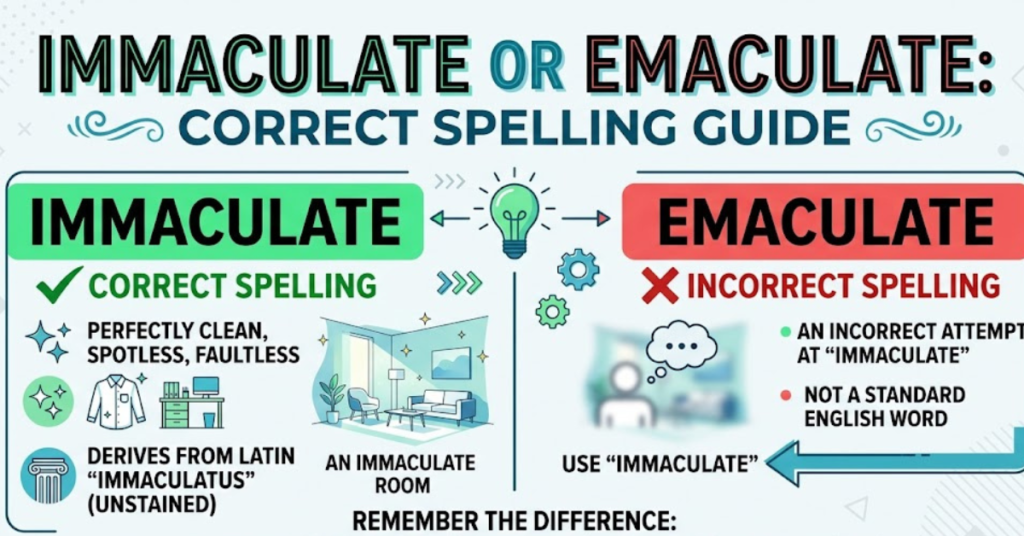
The correct spelling is immaculate
Emaculate is incorrect and not a real word
So if you’ve been asking, “is it immaculate or emaculate?”, the answer is clear—immaculate is the only correct form.
What Does “Immaculate” Mean?
The word immaculate comes from Latin roots meaning “without stain.” Today, it carries a few closely related meanings:
Common Definitions:
- Perfectly clean or spotless
- Free from flaws or mistakes
- Morally pure or unblemished
Example Sentences:
- Her house was immaculate, not a speck of dust in sight.
- He delivered an immaculate performance during the presentation.
- The car looked immaculate, as if it had just left the showroom.
Why Do People Write “Emaculate”?
This mistake usually happens for a few simple reasons:
1. Pronunciation Confusion
When spoken quickly, immaculate can sound like “emaculate,” especially in casual conversation.
2. Spelling Patterns
English has many words starting with “em-” (like emerge or embrace), so people assume the same applies here.
3. Lack of Familiarity
If you’ve only heard the word and never seen it written, it’s easy to guess the spelling incorrectly.
How to Remember the Correct Spelling
Here are a few quick tricks to lock it in:
- Think “IM = Incredibly Mint” (clean) → immaculate = perfectly clean
- Notice the double “m” → im-maculate
- Associate it with “image”—something that looks perfect
Simple Memory Tip:
If something is immaculate, it’s so clean it’s almost impossible to fault.
Immaculate in Different Contexts
The word isn’t just about cleanliness—it’s used in several contexts:
1. Physical Cleanliness
- An immaculate kitchen
- Immaculate clothing
2. Performance or Work
- An immaculate report
- Immaculate execution
3. Moral or Religious Use
- Often used to describe purity or perfection in character
Common Mistakes to Avoid
When dealing with immaculate or emaculate meaning, watch out for these:
- Writing emaculate in formal documents
- Using the word incorrectly for “good” instead of “perfect”
- Misspelling it in exams or professional writing
Quick Fix:
Always double-check for “imma-”, not “ema-”
FAQs
1. Is it immaculate or emaculate?
It is immaculate. “Emaculate” is a misspelling and not recognized in English.
2. What is the meaning of immaculate?
It means perfectly clean, flawless, or free from mistakes or imperfections.
3. Why do people confuse immaculate with emaculate?
Mostly due to pronunciation and common spelling patterns in English.
4. Is “emaculate” ever correct?
No, it is always incorrect. The proper word is immaculate.
5. How can I remember the correct spelling?
Focus on the double “m” in immaculate and associate it with perfection or cleanliness.
Conclusion
So next time you wonder, “is it immaculate or emaculate?”, you’ll know the answer instantly. Immaculate is the correct spelling, and it describes something that is flawless, spotless, or perfect in every way.
Mastering small distinctions like this can significantly improve your writing clarity and confidence. Keep practicing, stay curious, and if you found this helpful, consider exploring other commonly confused words to sharpen your language skills even further.