
You’ve probably seen both spellings, studder or stutter and wondered which one is actually correct. Beyond spelling, there’s also curiosity about what stuttering really is, why it happens, and whether it can be treated.
In this article, we’ll clear up the confusion around is it studder or stutter, and dive into the science, symptoms, causes, and practical ways to manage it. Whether you’re researching for yourself or someone you care about, you’ll find straightforward answers here.
Is It Studder or Stutter?
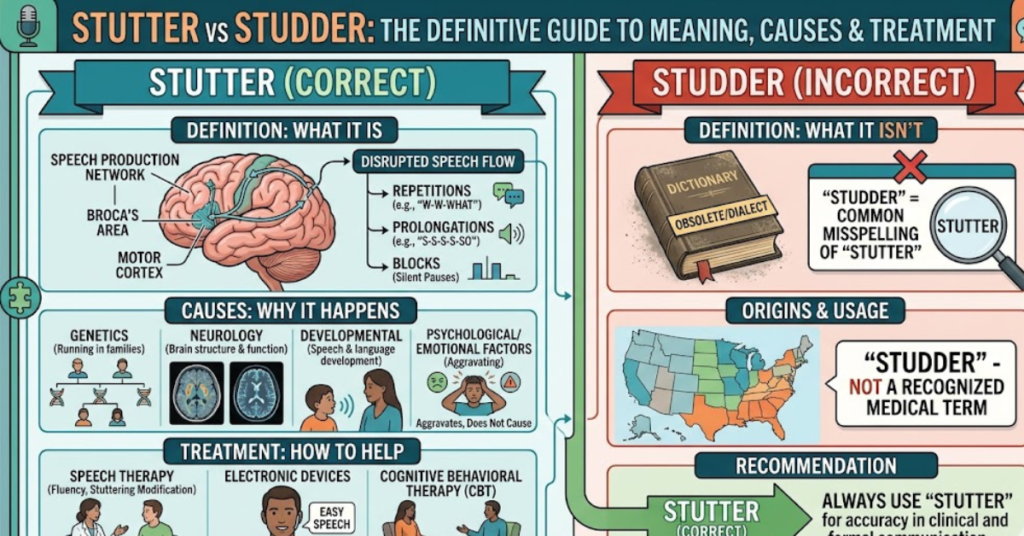
Let’s settle this first: “stutter” is the correct spelling.
“Studder” is simply a common misspelling that appears in casual writing or online searches. If you’re writing formally or academically, always use stutter.
What Is Stuttering?
Stuttering is a speech disorder that affects the flow of speech. People who stutter may:
- Repeat sounds or syllables (e.g., “b-b-ball”)
- Prolong sounds (e.g., “ssssun”)
- Experience blocks where no sound comes out
It’s not about intelligence or confidence—stuttering is a neurological and developmental condition.
Common Signs and Symptoms
Stuttering can vary from mild to severe. Here are the most common signs:
Speech-related symptoms
- Repetition of words or sounds
- Pauses in the middle of words
- Difficulty starting a sentence
Physical behaviors
- Blinking rapidly
- Tension in the face or jaw
- Head or body movements while speaking
Emotional impact
- Anxiety about speaking
- Avoiding conversations
- Reduced self-confidence
What Causes Stuttering?
There isn’t a single cause. Instead, stuttering is influenced by multiple factors.
1. Neurological Differences
Research shows differences in how the brain processes speech and language.
2. Genetics
Stuttering often runs in families, suggesting a hereditary link.
3. Developmental Factors
Many children go through a phase of disfluency as they learn to speak. For some, it persists.
4. Emotional and Environmental Triggers
Stress or pressure can worsen stuttering, though they don’t directly cause it.
Types of Stuttering
Understanding the type can help with treatment.
Developmental Stuttering
- Most common
- Occurs in young children learning to talk
Neurogenic Stuttering
- Caused by brain injury or neurological conditions
Psychogenic Stuttering
- Linked to emotional trauma (rare)
How Is Stuttering Diagnosed?
A speech-language pathologist typically evaluates:
- Speech patterns
- Frequency of disfluency
- Emotional responses to speaking
Early diagnosis, especially in children, can make a big difference.
Treatment Options That Work
There’s no one-size-fits-all cure, but many effective strategies exist.
1. Speech Therapy
The most common and effective approach. It helps individuals:
- Slow down speech
- Improve breathing patterns
- Build confidence
2. Cognitive Behavioral Therapy (CBT)
Helps manage anxiety and negative thoughts related to speaking.
3. Assistive Devices
Some devices alter auditory feedback to improve fluency.
4. Parental Support (for children)
Parents can help by:
- Speaking slowly and clearly
- Listening patiently
- Avoiding pressure
Practical Tips for Managing Stuttering
Here are simple, everyday strategies:
- Take your time when speaking
- Pause and breathe between sentences
- Maintain eye contact
- Practice speaking in low-pressure situations
- Join support groups
Stuttering in Adults vs Children
In Children
- Often improves with time or therapy
- Early intervention is key
In Adults
- May persist long-term
- Focus is often on management rather than cure
Myths About Stuttering
Let’s clear up a few misconceptions:
- Myth: Stuttering is caused by nervousness
Truth: Nervousness may worsen it, but doesn’t cause it - Myth: People who stutter are less intelligent
Truth: Intelligence has nothing to do with speech fluency - Myth: It can be “snapped out of”
Truth: It requires structured therapy and support
FAQs
1. Is it studder or stutter?
The correct spelling is stutter. “Studder” is a misspelling.
2. Can stuttering go away on its own?
In children, it sometimes does. In adults, it usually requires therapy to manage.
3. Is stuttering a disability?
It can be considered a speech disorder and, in some cases, a disability depending on severity.
4. What age does stuttering start?
It typically begins between ages 2 and 6 during language development.
5. Can stress cause stuttering?
Stress doesn’t cause it, but it can make symptoms worse.
6. Is there a permanent cure?
There’s no universal cure, but many people achieve significant improvement with therapy.
Conclusion
Understanding studder or stutter starts with getting the basics right—the correct term is stutter, and it’s a complex but manageable speech condition. From recognizing symptoms to exploring treatment options, the more informed you are, the better equipped you’ll be to support yourself or someone else.
If this topic resonates with you, consider exploring speech therapy options or learning more about communication strategies. Small steps can lead to meaningful progress.