
You’ve probably paused mid-sentence wondering: is it naive or nieve? It’s a surprisingly common confusion, and you’re definitely not alone. The mix-up happens because both versions look plausible, but only one is actually correct.
In this article, we’ll break down the difference between naive or nieve, explain the correct spelling, explore its meaning, and show you how to use it naturally in everyday writing. By the end, you’ll never second-guess it again.
Naive or Nieve: Which One Is Correct?
Let’s clear this up right away:
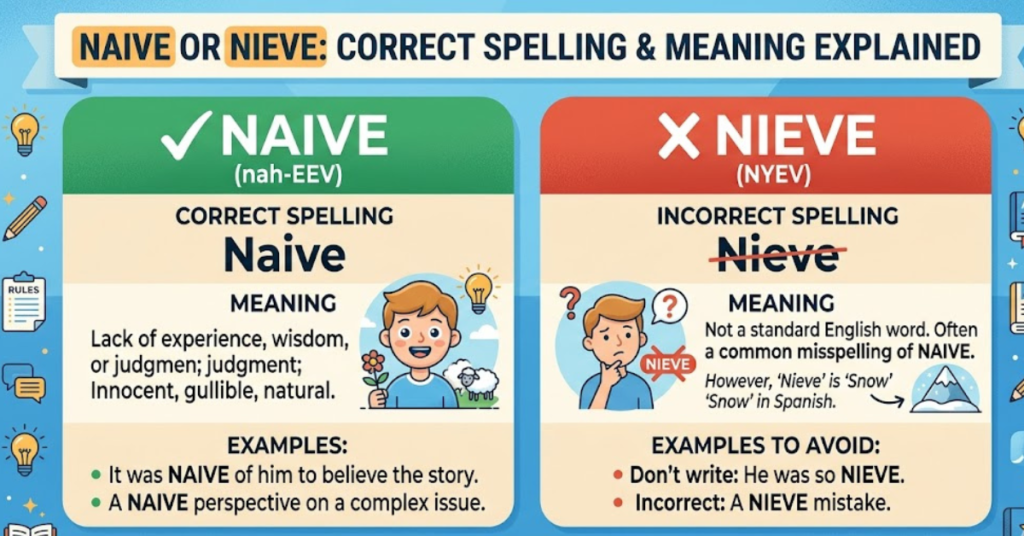
The correct spelling is “naive.”
“Nieve” is incorrect in English.
So if you’ve been typing nieve, it’s simply a spelling mistake—an easy one to make, especially because of how English blends with other languages.
Why Do People Confuse Naive or Nieve?
This confusion usually comes from pronunciation and language influence.
Common reasons include:
- Phonetic spelling: People write what they hear, and “naive” can sound like “nee-ve.”
- Influence from other languages: In Spanish, “nieve” actually means snow, which adds to the confusion.
- Silent vowels: English spelling isn’t always intuitive, especially with borrowed words.
Naive Meaning Explained
Now that we’ve settled how do you spell naive or nieve, let’s look at what the word actually means.
Definition of “Naive”:
“Naive” describes someone who:
- Lacks experience or sophistication
- Is overly trusting or innocent
- Believes things without questioning them
Simple examples:
- He was naive to trust everyone so quickly.
- Her naive view of the world made her optimistic.
It’s not always negative—it can sometimes imply honesty or purity—but it often suggests a lack of awareness.
How to Spell Naive Correctly
If you’re still unsure about how do you spell naive or nieve, here’s an easy trick:
Think of “naive” as having two vowels in the middle: “ai”
Ignore how it sounds—focus on how it’s written
Memory tip:
- Naive = “nai” + “ve”
- Never swap it to “nie”
Naive in Everyday Usage
Understanding naive or nieve meaning is one thing, but using it naturally is what really matters.
Common contexts where “naive” is used:
- Personal traits:
He’s too naive for business negotiations. - Opinions or beliefs:
That’s a naive way to look at politics. - Creative tone (sometimes positive):
The artwork has a naive charm.
Related Words and Synonyms
To deepen your understanding, here are some words similar to “naive”:
- Innocent
- Gullible
- Unsophisticated
- Trusting
- Unworldly
Each has a slightly different tone, so choose based on context.
Common Mistakes to Avoid
When dealing with naive or nieve, watch out for these:
- Writing “nieve” in English
- Assuming pronunciation equals spelling
- Overusing the word in formal writing
Stick with naive, and you’re safe.
FAQs
1. Is it naive or nieve?
The correct spelling is naive. “Nieve” is incorrect in English.
2. What does naive mean?
It describes someone who is inexperienced, overly trusting, or lacking awareness.
3. Why do people write nieve instead of naive?
Mostly due to pronunciation confusion and influence from other languages like Spanish.
4. How do you spell naive or nieve correctly?
Always spell it naive—with “ai” in the middle.
5. Is naive a negative word?
Not always. It can be slightly critical, but sometimes it implies innocence or sincerity.
Conclusion
The confusion between naive or nieve is common, but the solution is simple: “naive” is the only correct spelling in English. Once you understand its meaning and usage, it becomes much easier to spot and avoid mistakes.
If you’ve ever hesitated while writing it, now you’ve got clarity—and confidence. Keep practicing, pay attention to spelling patterns, and you’ll master tricky words like this in no time.
Want to sharpen your writing even more? Explore similar commonly confused words and build your vocabulary step by step.