
Ever hesitated while writing grisly vs grizzly and wondered which one is correct? You’re not alone. These two words sound identical, but they carry completely different meanings—and using the wrong one can lead to some unintentionally funny (or disturbing) sentences.
In this guide, we’ll break down the difference between grisly and grizzly, explore their meanings, origins, and usage, and give you simple tips to remember them. By the end, you’ll never mix them up again.
Grisly vs Grizzly: The Quick Difference
Let’s clear things up right away:
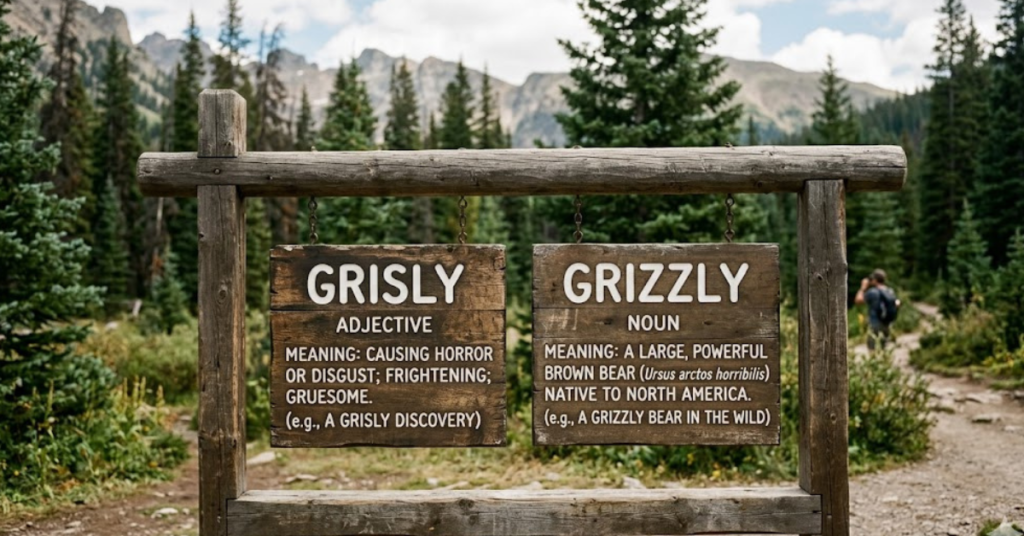
- Grisly = Something horrifying, gruesome, or shocking
- Grizzly = A large type of bear or something grayish in appearance
Despite sounding the same, they belong in entirely different contexts. Think horror vs wildlife.
What Does “Grisly” Mean?
Definition and Usage
Grisly refers to something extremely unpleasant, often involving violence, gore, or horror. It’s commonly used in storytelling, news reports, or descriptions of disturbing scenes.
Examples
- The detective described the crime scene as grisly.
- The movie included several grisly moments.
- The report revealed grisly details of the حادثہ.
When to Use “Grisly”
Use grisly when describing:
- Graphic or violent scenes
- Disturbing imagery
- Shocking or horrifying events
If it makes someone cringe or feel uneasy, grisly is your word.
What Does “Grizzly” Mean?
Definition and Usage
Grizzly has two primary meanings:
- A type of large brown bear found in North America
- Something that is gray or streaked with gray (often used for hair)
Examples
- We spotted a grizzly in the forest.
- His beard had turned grizzly with age.
- The park is known for its population of grizzly bears.
When to Use “Grizzly”
Use grizzly when referring to:
- The animal (grizzly bear)
- Grayish or aging appearance
Why People Confuse Grisly vs Grizzly
The confusion mostly comes down to pronunciation. Both words are pronounced the same way: GRIZ-lee. Because of this, even experienced writers sometimes mix them up.
Another reason is spellcheck—it won’t always catch the mistake since both are real words.
Easy Tricks to Remember the Difference
Here are a few simple memory hacks:
- Grisly = Gross
Both start with “gri-” and relate to something unpleasant or disturbing. - Grizzly = Bear
Think of the famous grizzly bear—big, furry, and definitely not about horror scenes. - Grizzly = Gray
The “zz” can remind you of aging or gray hair.
Common Mistakes to Avoid
Here are some typical errors people make:
- The movie had a grizzly ending
- The movie had a grisly ending
- He described a grisly bear in the जंगल
- He described a grizzly bear in the forest
Always double-check the context—are you talking about horror or wildlife?
Grisly vs Grizzly in Sentences
To make the distinction crystal clear, compare these:
- The grisly details of the accident shocked everyone.
- The grizzly wandered near the campsite.
One evokes fear from violence, the other from a wild animal.
FAQs
1. Are grisly and grizzly interchangeable?
No, they are not interchangeable. Grisly refers to something horrifying, while grizzly refers to a bear or something grayish.
2. Why do grisly and grizzly sound the same?
They are homophones—words that share the same pronunciation but have different meanings and spellings.
3. Can grizzly ever mean scary?
Not directly. While a grizzly bear can be scary, the word itself refers to the animal, not something gruesome.
4. Is “grisly bear” correct?
No, that’s incorrect. The correct term is grizzly bear.
5. How can I quickly remember the difference?
Associate grisly with “gross” and grizzly with “bear.” That mental shortcut works every time.
Conclusion
Understanding grisly vs grizzly comes down to context. If you’re describing something horrifying or graphic, go with grisly. If you’re talking about a bear or something grayish, grizzly is the correct choice.
It’s a small spelling difference, but it makes a big impact on clarity. Next time you write, pause for a second and ask yourself—horror or bear? That simple check will keep your writing sharp and accurate.
If you found this helpful, consider exploring other commonly confused words to level up your writing even further.