
Ever paused mid-sentence wondering “is it molding or moulding?” You’re not alone. This simple spelling variation trips up writers, designers, and DIY enthusiasts alike. The truth is, both terms are correct—but where and how you use them depends on context, region, and purpose.
In this guide, we’ll break down the meaning, spelling differences, and practical uses of home décor to manufacturing and even personal development. By the end, you’ll know exactly which version to use—and when.
What’s the Difference?
At its core, refers to the same concept: shaping or forming something into a specific structure or design.
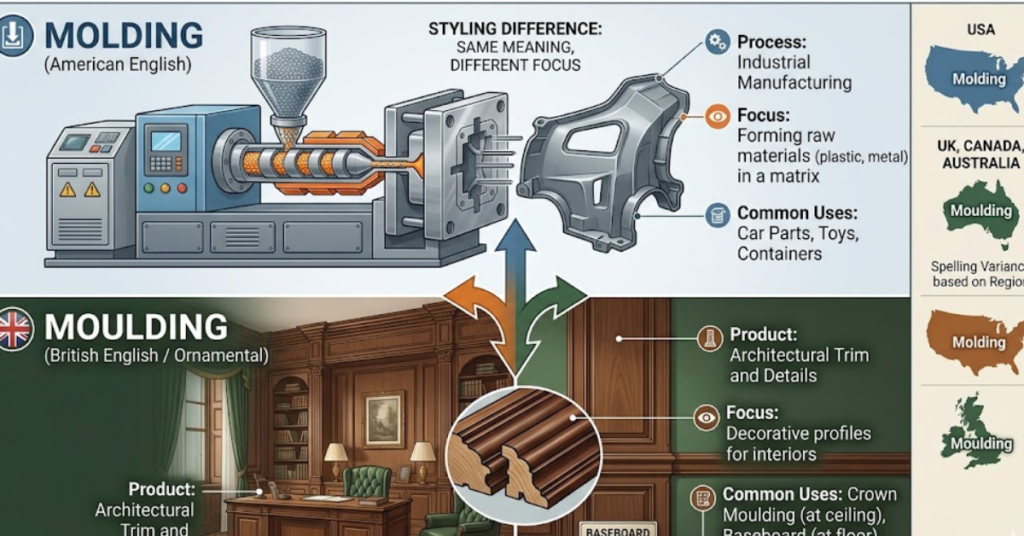
The key difference lies in regional spelling:
- Molding → American English (used in the U.S.)
- Moulding → British English (used in the UK and many Commonwealth countries)
So if you’re asking “which is correct molding vs moulding?”, the answer is simple: both are correct, depending on your audience.
Meaning Explained
The term has multiple meanings depending on context:
1. In Construction and Interior Design
It refers to decorative strips used to enhance walls, ceilings, and furniture.
Examples include:
- Crown trim along ceilings
- Baseboards along floors
- Door and window framing
2. In Manufacturing
It describes shaping materials like plastic or metal using molds.
Common processes:
- Injection techniques
- Compression forming
- Blow shaping
3. In Art and Crafts
It involves shaping soft materials like clay into desired forms.
What Should You Use?
If you’re decorating your home, you’ve likely come across crown molding or moulding. This decorative trim sits where the wall meets the ceiling, adding elegance and character.
So, is it crown molding vs moulding?
- In the U.S.: crown molding
- In the UK: crown moulding
Both refer to the same architectural feature—only the spelling changes.
Trim in Home Design
Trim plays a huge role in defining a room’s style. Whether modern or traditional, molding or moulding trim adds detail and polish.
Popular Types of Trim
- Baseboards – run along the bottom of walls
- Chair rails – protect walls from furniture
- Casing – frames doors and windows
- Crown trim – adds a finished look to ceilings
Why It Matters
- Enhances visual appeal
- Increases property value
- Hides imperfections
Plastic and Injection Molding or Moulding
In industrial settings, plastic molding or moulding is a major manufacturing method.
Injection Molding or Moulding Process:
- Melt plastic material
- Inject it into a mold
- Cool and solidify
- Remove the finished product
This method is widely used for:
- Packaging
- Automotive parts
- Electronics
Clay Molding or Moulding in Art
Artists often use clay molding or moulding to create sculptures, pottery, and decorative items.
Benefits of Working with Clay:
- Easy to shape and reshape
- Ideal for beginners and professionals
- Allows high creativity
Whether you call it molding or moulding clay, the process remains the same—transforming raw material into art.
Wood Molding or Moulding in Carpentry
Woodworkers rely on wood molding or moulding to create decorative and functional elements.
Common Uses:
- Furniture detailing
- Cabinet edges
- Wall panels
It’s a blend of craftsmanship and precision, adding depth and texture to wooden structures.
A Figurative Meaning
Interestingly, the term isn’t just physical. Molding vs moulding a person refers to shaping someone’s character, habits, or mindset.
Examples:
- Parents shaping a child’s behavior
- Teachers guiding student development
- Life experiences influencing personality
It’s a powerful metaphor for growth and influence.
UK vs US Usage
If you’re writing for an international audience, consistency matters.
Common Mistakes to Avoid
When deciding between molding or moulding, keep these in mind:
- Don’t switch spellings within the same article
- Match your audience’s regional language
- Avoid overusing the keyword unnaturally
Consistency is key for both readability and search rankings.
Read also <<< Dysregulation vs Disregulation: Key Differences Explained
FAQs
Is it molding or moulding?
Both are correct. “Molding” is American English, while “moulding” is British English.
What does it mean?
It refers to shaping materials or decorative trim used in architecture and design.
Is it crown molding or moulding?
Use “crown molding” in the U.S. and “crown moulding” in the UK.
What is injection molding or moulding?
It’s a manufacturing process where molten material is shaped using a mold.
Can molding or moulding refer to people?
Yes, it can describe shaping someone’s personality or behavior.
Conclusion
So, molding vs moulding—which is correct? The answer depends on where you are and who you’re writing for. While the spelling differs, the meaning stays consistent across design, manufacturing, art, and even personal growth.
The key takeaway is simple: choose one version and stay consistent. Whether you’re installing trim, crafting with clay, or writing content, understanding this subtle difference helps you communicate more clearly and professionally.
If you’re exploring home improvement, design ideas, or creative projects, mastering terms like these is a small step that makes a big difference.