
Ever come across phenix and wondered if it’s just a typo for phoenix? You’re not alone. The confusion around phenix vs phoenix is more common than you might think, especially since both words look similar and sometimes appear in historical or brand contexts.
In this guide, we’ll break things down in a simple, practical way. You’ll learn what each term means, where they come from, and how to use them correctly in modern writing.
What Does “Phoenix” Mean?
The word phoenix has a well-established meaning and is widely recognized.
Mythological Meaning
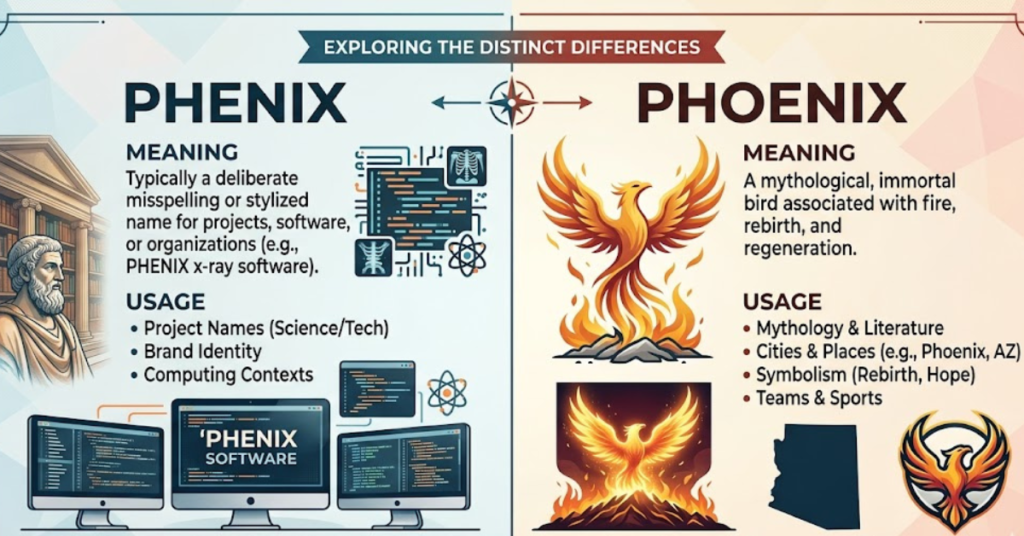
In mythology, a phoenix is a legendary bird that:
- Bursts into flames at the end of its life
- Is reborn from its own ashes
- Symbolizes renewal, immortality, and transformation
This concept appears in ancient Greek, Egyptian, and Roman traditions.
Modern Usage
Today, phoenix is used in various contexts:
- Figurative language: “She rose like a phoenix after failure.”
- Place names: Phoenix, Arizona
- Brand names and titles
What Does “Phenix” Mean?
Unlike phoenix, phenix is not the standard modern spelling—but it’s not entirely incorrect either.
Historical and Alternative Spelling
Phenix is an older or alternative spelling of phoenix. It appears in:
- Archaic English texts
- Old translations of classical literature
- Historical documents
Modern-Day Usage
You may still see phenix used in:
- Business names (e.g., “Phenix Salon Suites”)
- Proper nouns
- Stylistic or branding choices
However, in everyday writing, it’s generally considered nonstandard.
Phenix vs Phoenix: Key Differences
Here’s a clear side-by-side comparison to settle the confusion:
| Feature | Phoenix | Phenix |
| Standard spelling | Yes | No (archaic/variant) |
| Common usage | Widely used today | Rare, mostly names or brands |
| Origin | Greek mythology | Variant of the same word |
| Acceptability | Preferred in modern English | Context-dependent |
When Should You Use “Phoenix”?
Use phoenix in most situations, especially when:
- Writing formally or academically
- Referring to mythology
- Using metaphorical expressions
- Ensuring correct spelling in general communication
Example sentences:
- “The company rose like a phoenix after bankruptcy.”
- “The phoenix is a symbol of rebirth.”
When Is “Phenix” Acceptable?
You might use phenix in limited cases:
- When referring to a specific name or brand
- When quoting historical texts
- For stylistic or creative writing choices
Example:
- “Phenix Corporation announced a new product line.”
Common Mistakes to Avoid
Many writers mix these two forms unintentionally. Here are a few pitfalls to watch for:
- Using phenix in formal writing when phoenix is expected
- Assuming both spellings are interchangeable
- Missing context (brand name vs general word)
A good rule of thumb:
If you’re unsure, go with phoenix.
Why the Confusion Exists
The confusion between phenix vs phoenix comes down to language evolution.
- English borrowed the word from Greek (phoinix)
- Over time, spelling variations appeared
- Standardization favored phoenix
So while phenix isn’t “wrong,” it’s simply outdated in most contexts.
FAQs
1. Is “phenix” a misspelling of “phoenix”?
Not exactly. It’s an older or alternative spelling, but it’s considered nonstandard today.
2. Which spelling is correct in modern English?
Phoenix is the correct and widely accepted spelling.
3. Can I use “phenix” in formal writing?
It’s best to avoid it unless you’re referencing a proper noun or historical text.
4. Why do some companies use “phenix”?
Brands sometimes choose unique spellings for identity and trademark reasons.
5. Do both words have the same meaning?
Yes, they refer to the same mythological concept, but usage differs.
Conclusion
Understanding phenix vs phoenix comes down to recognizing standard usage versus historical variation. While both forms share the same origin and meaning, phoenix is the clear winner in modern writing.
If you want your writing to be clear, professional, and widely understood, stick with phoenix. Save phenix for specific names or stylistic choices.
Want to sharpen your writing even more? Explore other commonly confused words and take your language skills to the next level.