
Have you ever paused mid-sentence wondering whether to write roll call or role call? You’re not alone. These two phrases sound identical, but they carry very different meanings—and mixing them up can subtly change what you’re trying to say.
In this guide, we’ll break down roll call or role call in a simple, practical way. You’ll learn what each term means, where it’s used, and how to remember the difference without second-guessing yourself.
What Is “Roll Call”?
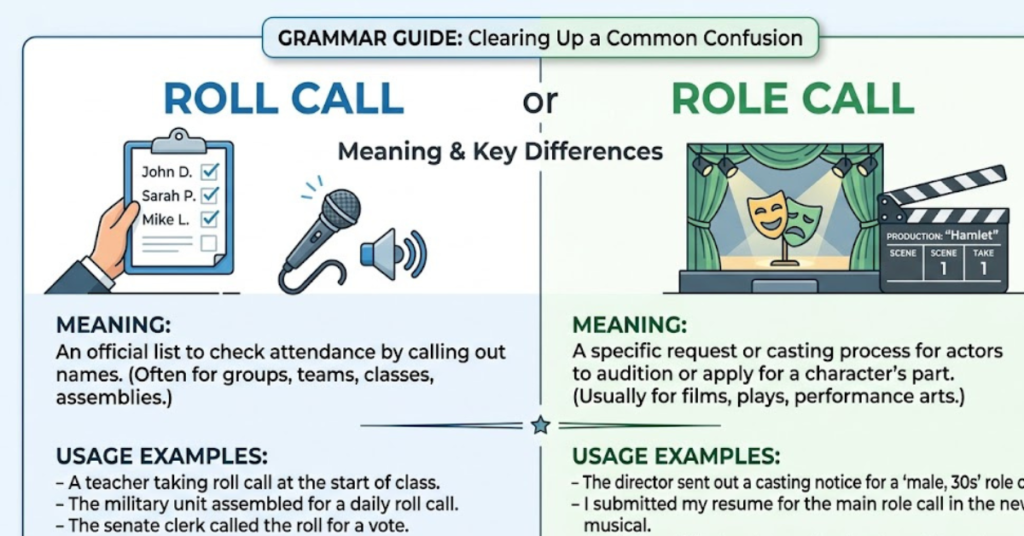
Roll call refers to the act of calling out names from a list to check who is present.
It’s commonly used in formal and everyday settings such as:
- Classrooms (teachers checking attendance)
- Meetings or conferences
- Military formations
- Legislative sessions
Example Sentences
- The teacher took a roll call at the start of class.
- The manager conducted a quick roll call before the meeting began.
Why “Roll”?
The word roll comes from historical lists of names written on a scroll (or “roll”). Over time, the phrase stuck—even though we now use digital lists.
What Is “Role Call”?
Here’s the truth: role call is not a standard or correct phrase in most contexts.
People often write role call by mistake because:
- “Role” is a more familiar word (as in acting or job positions)
- It sounds exactly like “roll call”
When Might “Role Call” Make Sense?
In rare or creative contexts, someone might use role call to describe:
- Assigning roles in a play or project
- Discussing responsibilities within a team
Even then, it’s usually clearer to say:
- “Assigning roles”
- “Role assignment”
Roll Call or Role Call: Key Differences
Here’s a quick comparison to make things crystal clear:
| Term | Meaning | Correct Usage |
| Roll call | Checking attendance by reading names | Standard |
| Role call | Not standard (often a mistake) | Avoid |
How to Remember the Difference
If you often confuse role call or roll call, try these simple tricks:
1. Think of a List
“Roll call” = a rolled list of names being read aloud.
2. Replace the Word
If you can swap it with “attendance check,” then roll call is correct.
3. Associate “Role” with Acting
“Role” belongs in contexts like:
- Acting (movie roles)
- Job duties (team roles)
Not attendance.
Common Mistakes to Avoid
Even experienced writers slip up. Here are a few typical errors:
- “The teacher did a role call.”
- “The teacher did a roll call.”
- “We started with a role call in the meeting.”
- “We started with a roll call in the meeting.”
Why This Confusion Happens
The confusion between roll call or role call comes down to homophones—words that sound the same but have different meanings and spellings.
English is full of these tricky pairs, like:
- Their / There
- Affect / Effect
- Scraped / Scrapped
That’s why context matters more than pronunciation.
When Accuracy Matters Most
Using the correct term is especially important in:
- Academic writing
- Professional emails
- Official documents
- Public speaking
A small mistake like writing role call can affect clarity and credibility.
FAQs
1. Is “role call” ever correct?
Not in standard English usage. It’s usually a mistake for “roll call.”
2. What does roll call mean in school?
It means the teacher reads student names to check attendance.
3. Why do people confuse roll call or role call?
Because both phrases sound identical, making spelling the only difference.
4. Can “role call” be used creatively?
Yes, but it’s uncommon. It might appear in informal or creative writing, but it’s not standard.
5. Is roll call used outside schools?
Absolutely. It’s used in meetings, the military, and government settings.
Conclusion
When it comes to roll call or role call, the answer is simple: roll call is the correct and widely accepted term. It refers to checking attendance by reading names from a list, while role call is almost always an error.
Remember the “rolled list” trick, and you’ll never mix them up again. If you’re aiming for clear, professional writing, sticking with the correct term makes a noticeable difference.
Want to sharpen your writing even more? Keep exploring commonly confused words—you’ll be surprised how much impact small details can have.