
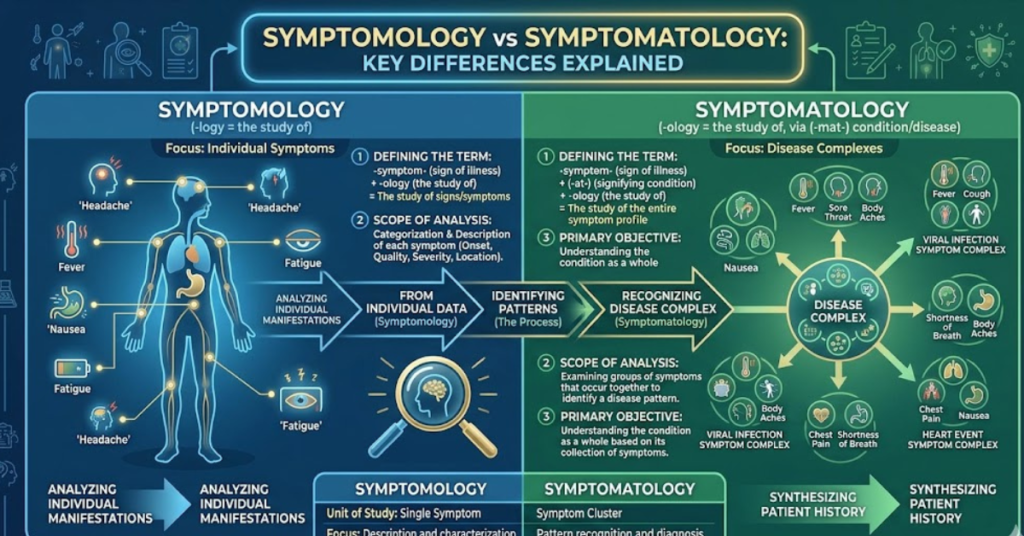

Ever stumbled across the terms symptomology and symptomatology and wondered if they mean the same thing? You’re not alone. The debate around symptomology vs symptomatology often confuses students, writers, and even professionals.
At first glance, the words look interchangeable. But in reality, one is widely accepted in formal contexts—especially in medicine—while the other is often considered less precise. In this guide, we’ll break down their meanings, usage, and when to use each term correctly.
What Does “Symptomatology” Mean?
Symptomatology is the established and correct term in medical and scientific language. It refers to:
- The study of symptoms associated with a disease
- A collection or pattern of symptoms
- The clinical presentation of an illness
Example Usage:
- “The symptomatology of the condition includes fatigue and fever.”
In professional settings—such as healthcare, research, or academic writing—this is the term you’ll almost always see.
What Is “Symptomology”?
Symptomology is often used as a simplified or informal alternative to symptomatology. However, it’s generally considered:
- Less precise
- Non-standard in medical terminology
- Occasionally incorrect in formal writing
Example Usage:
- “The symptomology of the disease was difficult to identify.”
While people may understand what you mean, experts tend to avoid this version.
Symptomology vs Symptomatology: The Key Differences
Let’s break it down clearly:
| Feature | Symptomatology | Symptomology |
| Formal Usage | Widely accepted | Rarely accepted |
| Field | Medical, academic | Informal/general |
| Accuracy | High | Lower |
| Meaning | Study or collection of symptoms | Simplified version |
Bottom Line:
- Symptomatology = Correct and preferred
- Symptomology = Informal and often discouraged
Why Does the Confusion Exist?
The confusion around symptomology vs symptomatology comes down to language evolution and simplification.
Here’s why people mix them up:
- Word Length – “Symptomatology” is longer and harder to say
- Casual Usage – People naturally shorten complex words
- Misinterpretation – “-ology” usually means “study of,” which makes “symptomology” seem logical
Despite this, “symptomatology” remains the accurate term because it specifically refers to the structured study or grouping of symptoms.
When Should You Use Each Term?
Use “Symptomatology” When:
- Writing academic papers
- Working in healthcare or research
- Creating professional or SEO content
- Discussing diseases or diagnoses
Avoid “Symptomology” When:
- Writing formally
- Communicating with medical professionals
- Publishing authoritative content
Acceptable Use of “Symptomology”:
- Casual conversations
- Informal writing (blogs, social media—though still not ideal)
Related Terms You Should Know
Understanding a few related terms can help clarify things further:
- Symptoms – Individual signs of illness (e.g., headache, nausea)
- Syndrome – A group of symptoms occurring together
- Diagnosis – Identifying a condition based on symptoms
- Pathology – Study of diseases
These terms often appear alongside symptomatology in medical contexts.
Common Mistakes to Avoid
When dealing with symptomology vs symptomatology, watch out for these pitfalls:
- Using “symptomology” in academic writing
- Assuming both terms are equally valid
- Mixing them interchangeably in the same document
Pro Tip:
If you’re unsure, stick with symptomatology—it’s always the safer choice.
FAQs
1. Is symptomology a real word?
Yes, but it’s considered informal and less accurate. It’s not preferred in medical or academic contexts.
2. Why is symptomatology preferred over symptomology?
Because it precisely refers to the study and classification of symptoms, making it more accurate and professional.
3. Can I use symptomology in casual writing?
You can, but it’s still better to use “symptomatology” for clarity and correctness.
4. Are symptomology and symptomatology interchangeable?
Not really. While people may understand both, only symptomatology is widely accepted as correct.
5. Which term should I use for SEO content?
Use symptomatology primarily, but you can mention symptomology vs symptomatology to capture search intent.
Conclusion
Understanding the difference between symptomology vs symptomatology isn’t just about semantics—it’s about clarity and credibility. While both terms may appear similar, only symptomatology holds up in professional, academic, and medical settings.
If you want your writing to sound polished and authoritative, stick with the correct term. It’s a small change that makes a big difference.
Curious about more commonly confused words? Keep exploring—you’ll sharpen both your vocabulary and your confidence along the way.