
Ever typed gnaw or knaw and paused, wondering which one is actually correct? You’re not alone. English is full of tricky spellings, and this is one of those words that trips people up more often than you’d think.
In this guide, we’ll clear up the confusion once and for all. You’ll learn the correct spelling, what it means, how to use it properly, and why the incorrect version keeps popping up.
Gnaw or Knaw: Which One Is Correct?
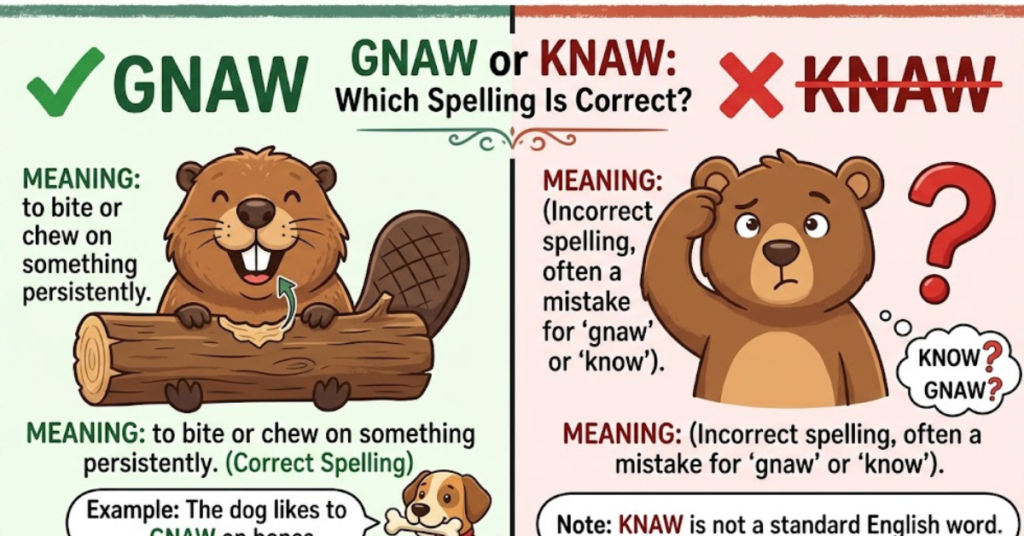
Let’s get straight to the point:
- Gnaw is the correct spelling
- Knaw is incorrect and not recognized in standard English
If you’re writing for school, work, or even casual communication, gnaw is the only version you should use.
What Does “Gnaw” Mean?
The word gnaw is a verb with a couple of related meanings:
1. To bite or chew repeatedly
Often used when describing animals (or people) chewing something persistently.
Examples:
- The dog began to gnaw on a bone.
- Rats can gnaw through wood and plastic.
2. To cause persistent worry or distress
It can also be used metaphorically.
Examples:
- A sense of guilt began to gnaw at him.
- Doubt continued to gnaw at her confidence.
Why Do People Write “Knaw”?
The confusion between gnaw or knaw usually comes from how the word sounds.
Here’s why it happens:
- The “g” in gnaw is silent
- The word is pronounced just like “naw”
- People assume it should follow patterns like “know” or “knee”
So naturally, knaw feels like it could be right—but it isn’t.
The History Behind “Gnaw”
English spelling often reflects its history, and gnaw is no exception.
- It comes from Old English “gnagan”, meaning “to bite”
- Over time, pronunciation simplified, but spelling stayed similar
- The silent “g” is a leftover from earlier forms of the language
This is the same reason we have silent letters in words like:
- gnome
- gnash
- sign
How to Remember the Correct Spelling
If you struggle to remember gnaw, here are a few simple tricks:
Quick Memory Tips:
- “G” for “grind” – both relate to chewing
- Think of animals like gnawing rodents
- Remember: unusual spelling often signals an old English origin
Common Mistakes to Avoid
When dealing with gnaw or knaw, watch out for these errors:
- Writing knaw in essays or emails
- Assuming phonetic spelling is always correct
- Confusing it with similar-sounding words like “naw” (slang for no)
Example Sentences for Practice
Here are a few more examples to help lock it in:
- The puppy tried to gnaw through the leash.
- Hunger began to gnaw at his stomach.
- She absentmindedly started to gnaw on her pencil.
FAQs
Is “knaw” ever correct?
No, knaw is not a correct spelling in English. It’s a common mistake based on pronunciation.
Why is the “g” silent in “gnaw”?
The silent “g” comes from the word’s Old English roots. Over time, pronunciation changed but spelling didn’t fully follow.
Can “gnaw” be used metaphorically?
Yes. It’s often used to describe emotional or mental discomfort, like worry or guilt.
Is “gnaw” commonly used today?
Yes, though more often in descriptive or literary contexts. It’s still widely understood and used.
Conclusion
When it comes to gnaw or knaw, the answer is simple: only “gnaw” is correct. While the spelling might look unusual, it has deep historical roots and clear meanings in both literal and figurative contexts.
If you remember nothing else, just keep this in mind: English doesn’t always sound how it looks—and gnaw is a perfect example of that.
Want to sharpen your writing even more? Keep exploring tricky word pairs—you’ll be surprised how quickly your confidence grows